Villa Tugendhat: Mies van der Rohe’s Modernist Masterpiece
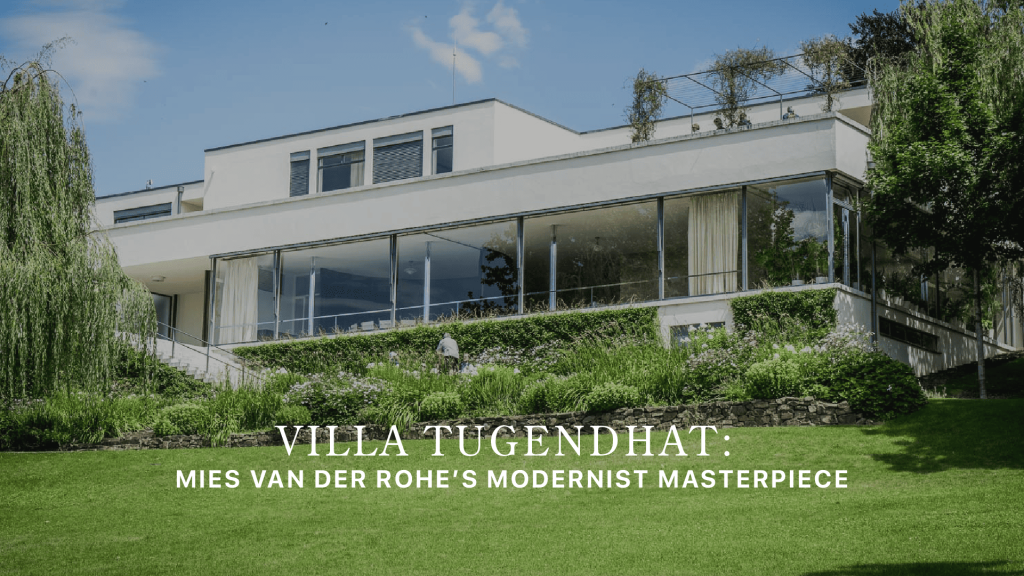
Located in Brno, Czech Republic, Villa Tugendhat remains one of the most influential homes in modern architecture. Designed by Mies van der Rohe in collaboration with Lilly Reich between 1928 and 1930, the villa introduced a new way of living shaped by openness and simplicity.
Recognised as a UNESCO World Heritage Site, Villa Tugendhat Brno became a defining example of functionalist architecture in Europe. From its revolutionary open-plan layout to the elegant Villa Tugendhat interior, every detail reflects Mies van der Rohe’s famous philosophy “less is more”.
This article explores the vision behind Villa Tugendhat, the history of the Tugendhat house, its innovative architecture, distinctive materials, and the lasting influence of this Modernist Masterpiece.
-
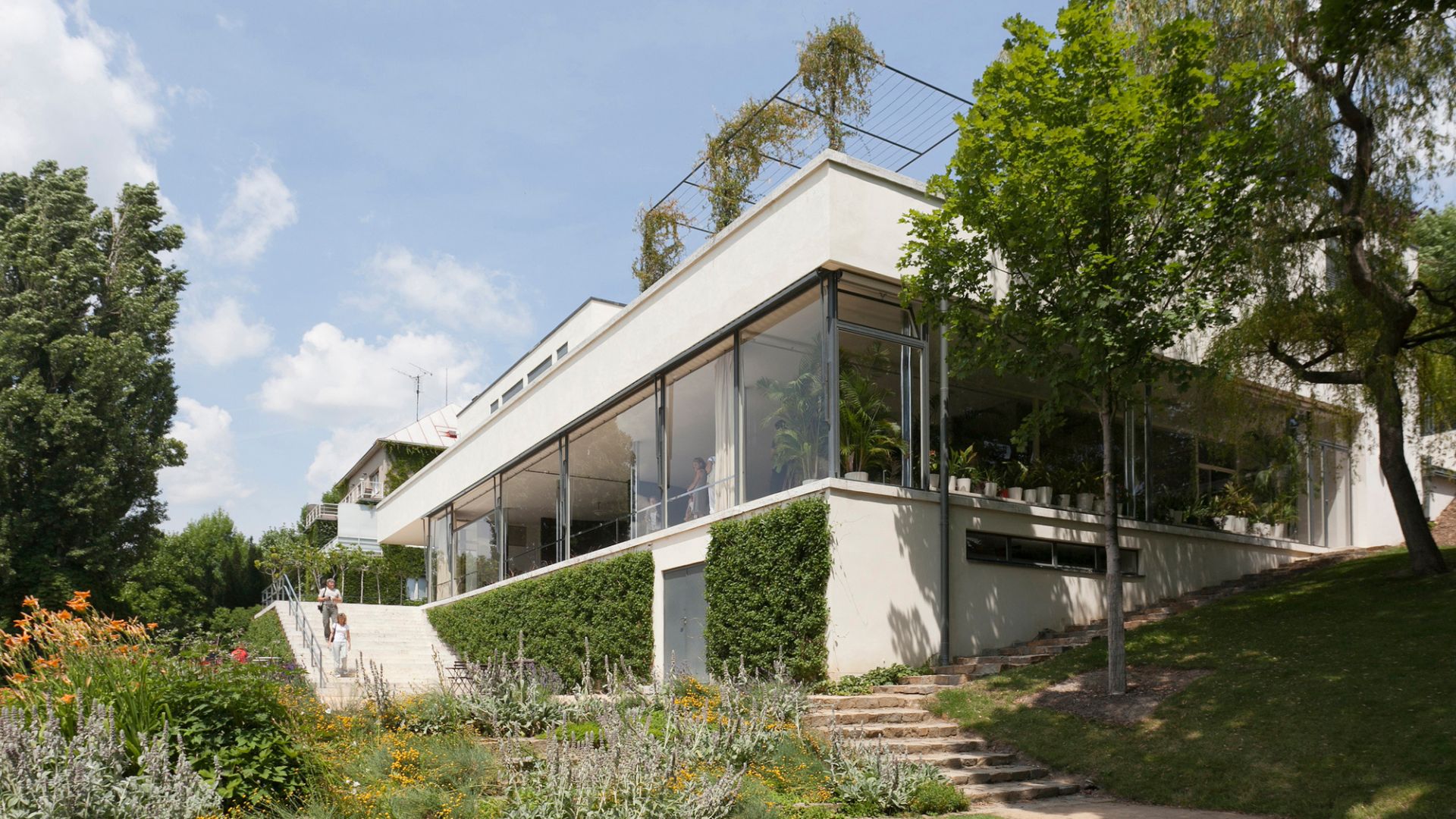
- Villa Tugendhat exterior by Mies van der Rohe | Source: Pinterest
Villa Tugendhat and Mies van der Rohe’s Vision
Villa Tugendhat was designed as a new vision of modern living. Located in Brno, Czech Republic, the residence reflected Mies van der Rohe’s belief that architecture should focus on simplicity and functionality. For the architect, a home was not simply a place to live, but a carefully designed environment capable of shaping the relationship between people and space.
Guided by the principle of “less is more”, Mies van der Rohe Villa Tugendhat introduced the revolutionary idea of open-plan concept. Traditional homes of the period were divided into enclosed rooms with rigid functions, while Villa Tugendhat proposed fluid spaces that transitioned naturally into one another. The villa’s large glass walls and minimal structural interruption created a sense of freedom rarely seen in residential architecture at the time.
Working alongside Lilly Reich, Mies designed Villa Tugendhat as a complete spatial experience where architecture and nature existed in harmony. This innovative approach is one of the reasons why Villa Tugendhat architecture remains so influential today.
-
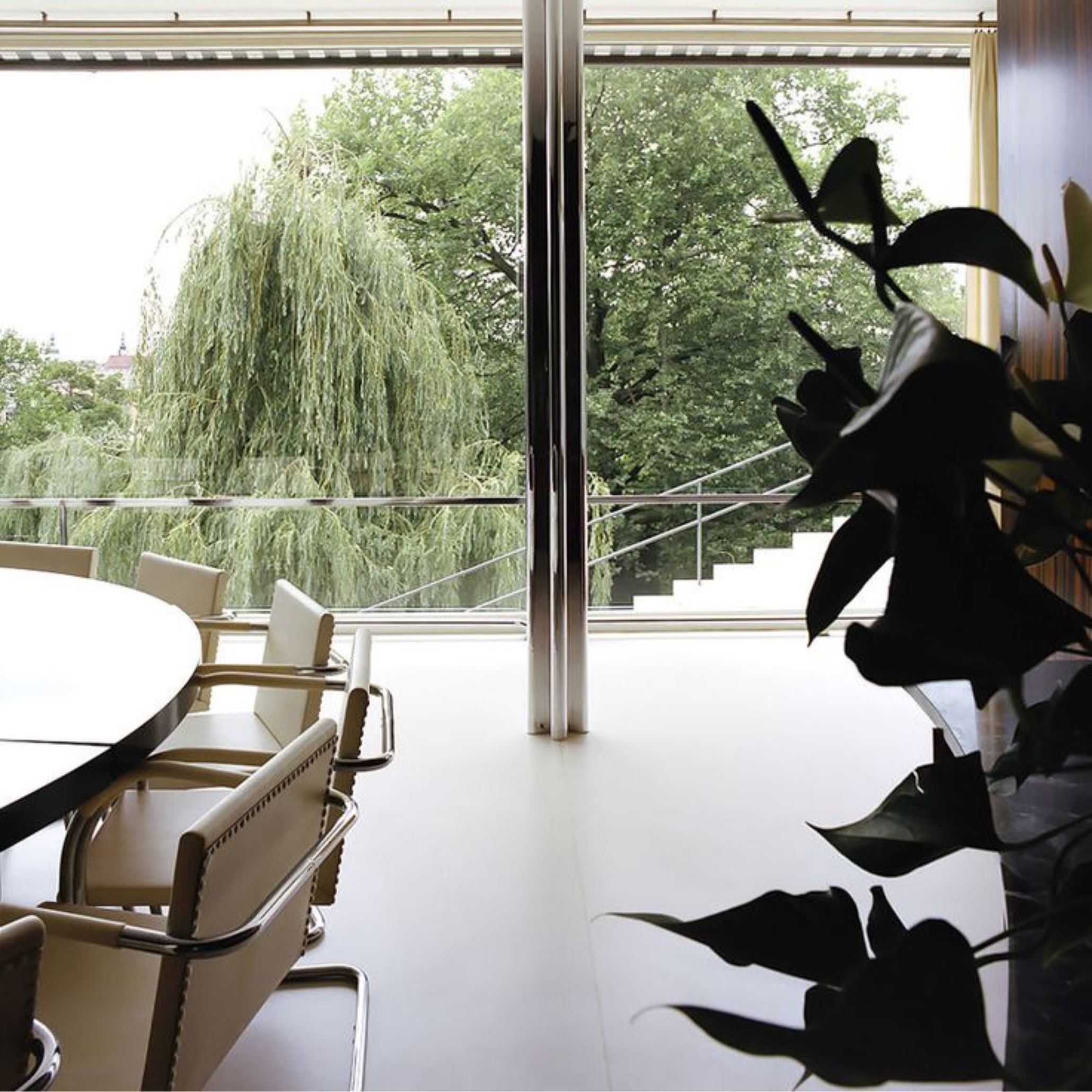
- Interior of Villa Tugendhat | Source: Pinterest
-
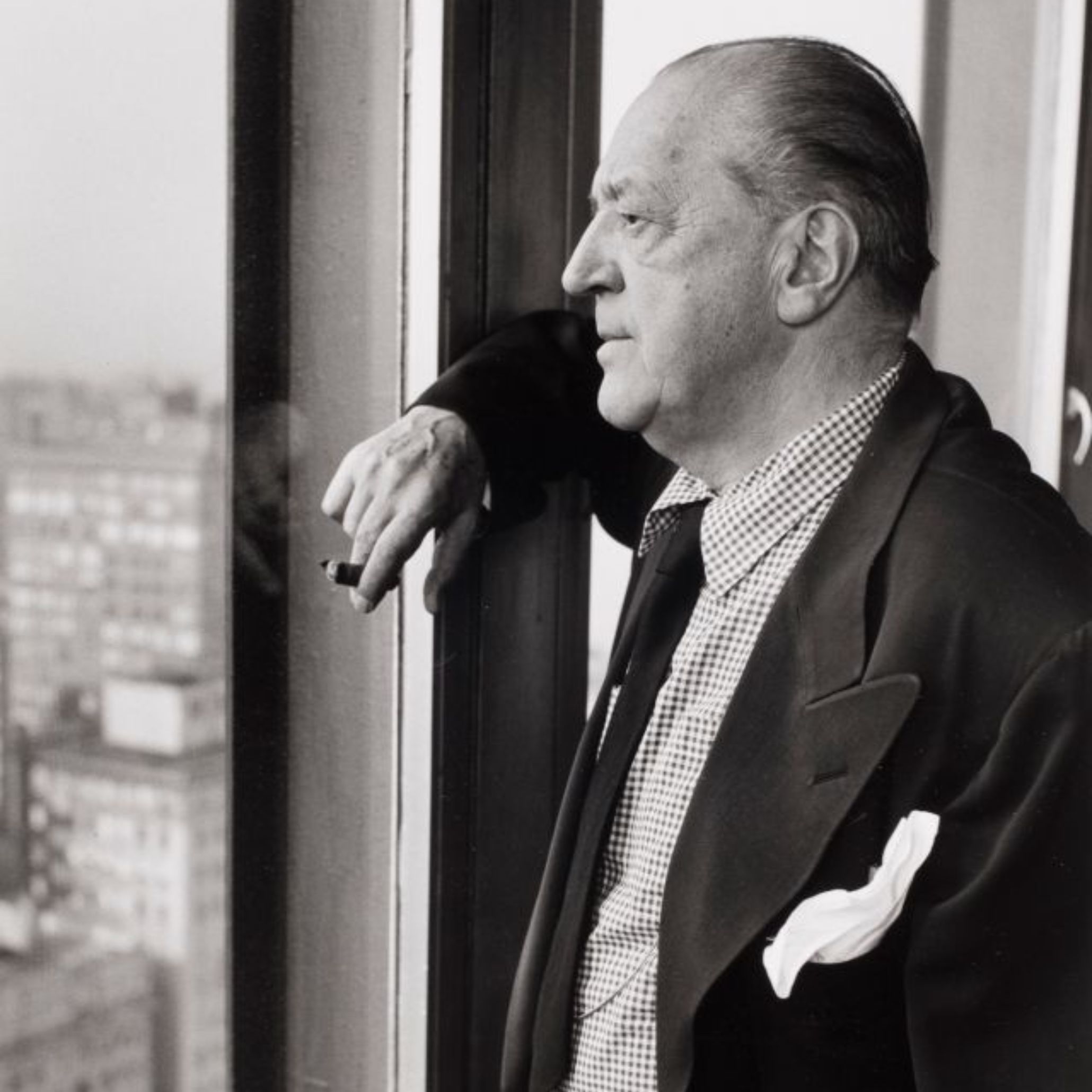
- Mies van der Rohe | Source: Pinterest
The History of the Tugendhat House
The Tugendhat house was commissioned by Fritz and Greta Tugendhat, a wealthy Jewish family from Brno who wanted a residence that reflected a modern and progressive way of living. To bring this vision to life, the couple commissioned Mies van der Rohe and Lilly Reich, who designed Villa Tugendhat between 1928 and 1930.
Built on a sloping site overlooking the city, the villa quickly gained attention for its innovative design and revolutionary approach to domestic architecture. Through open-plan interiors, floor-to-ceiling glass walls, and advanced technology for the time, Villa Tugendhat introduced a new architectural language centred on openness and functionality.
The family lived in Villa Tugendhat for only a few years before fleeing Czechoslovakia in 1938 due to the rise of Nazi Germany. During World War II, the villa was confiscated and suffered considerable damage, while many original elements of the Villa Tugendhat interior disappeared.
In the decades that followed, the residence served different purposes, including a rehabilitation centre and public institution, before restoration efforts gradually returned the villa to its original appearance. Today, Villa Tugendhat Brno functions as a museum and UNESCO World Heritage Site, welcoming visitors from around the world and preserving the legacy of one of the greatest works of modern architecture.
-
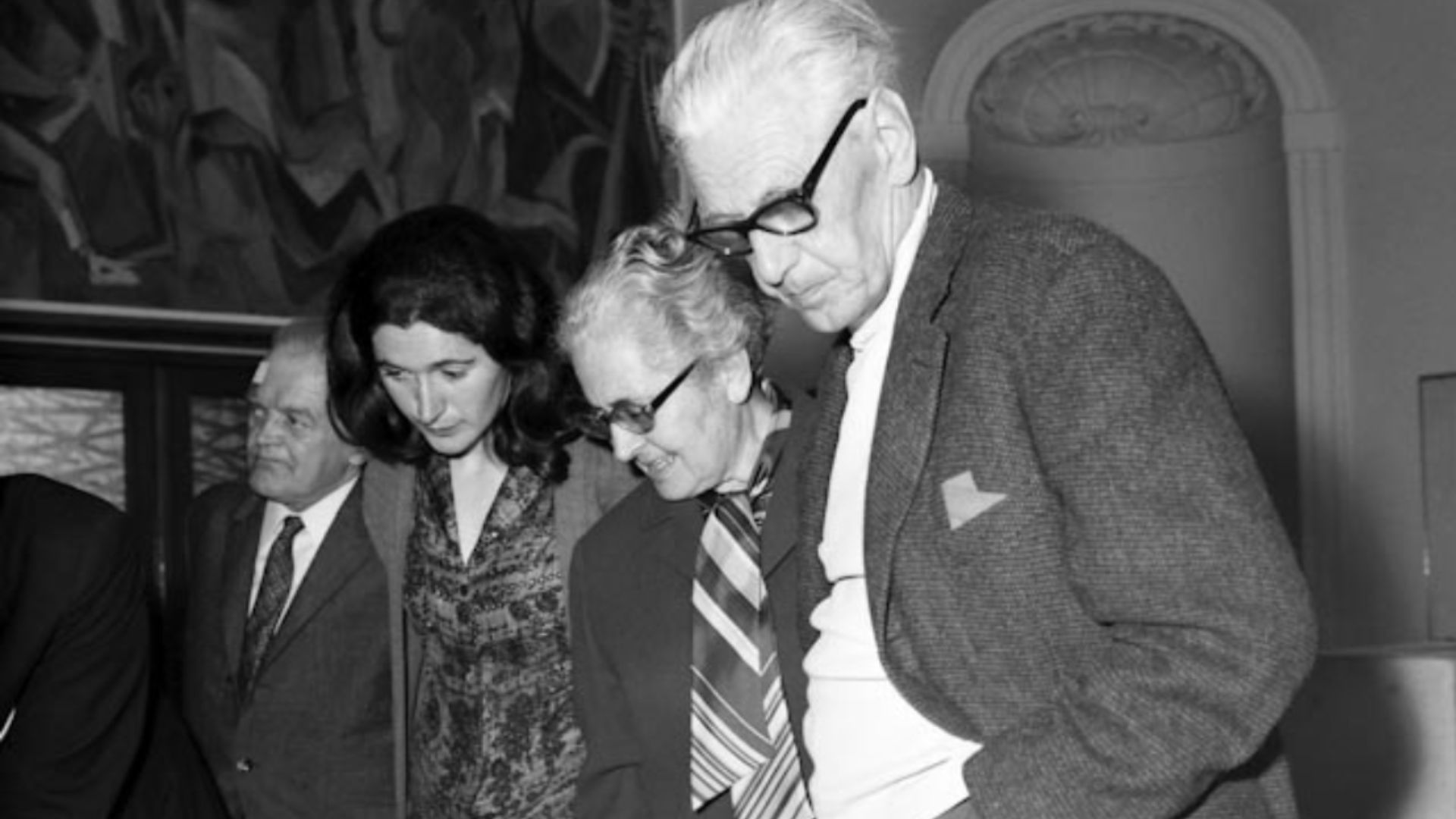
- Historical meeting about the restoration of Villa Tugendhat | Source: Vila Tugendhat
The Architecture of Villa Tugendhat
Villa Tugendhat architecture transformed residential design through its innovative structure and open-plan layout. Built using reinforced concrete and a steel framework, the villa eliminated traditional load-bearing walls,allowing spaces to interconnect fluidly.
One of the most remarkable features of Mies van der Rohe Villa Tugendhat is its floor-to-ceiling glass walls, including retractable windows that disappear into the floor through an electric mechanism. These elements strengthened the connection between the interior and the surrounding landscape.
The villa is organised through a clear structural logic where function defines space rather than decoration. The horizontal composition of the building responds directly to its site, creating a strong dialogue between architecture and landscape. From different levels, the house reveals shifting perspectives over the city, making the surrounding environment an active part of the architectural experience.
The Villa Tugendhat exterior reflects the principles of modernism through clean horizontal lines, transparency, and minimalism. Combined with advanced technology for the time, including air conditioning and modern ventilation systems, the villa became a pioneering example of modern residential architecture.
-
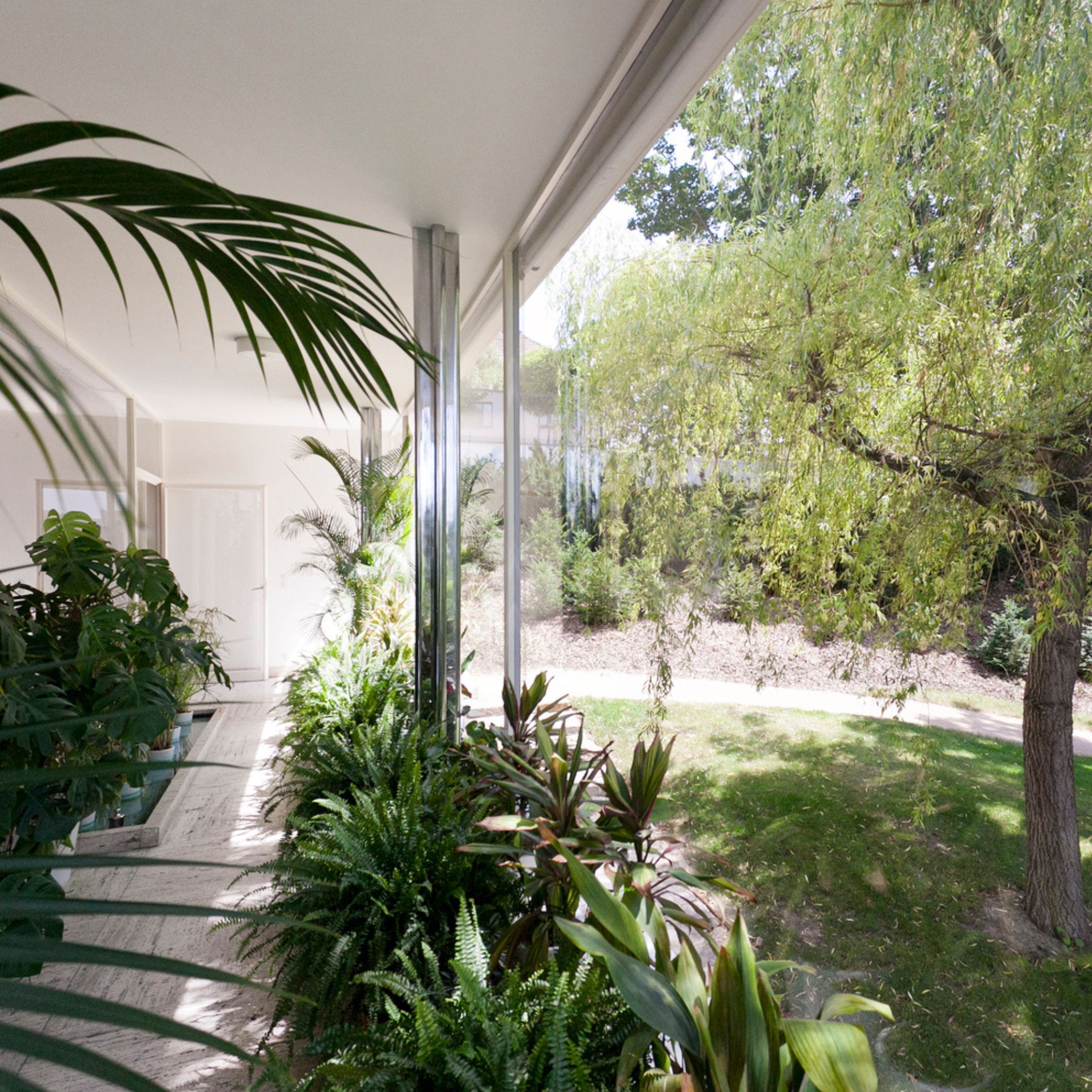
- Interior–exterior continuity at Villa Tugendhat | Source: Pinterest
-
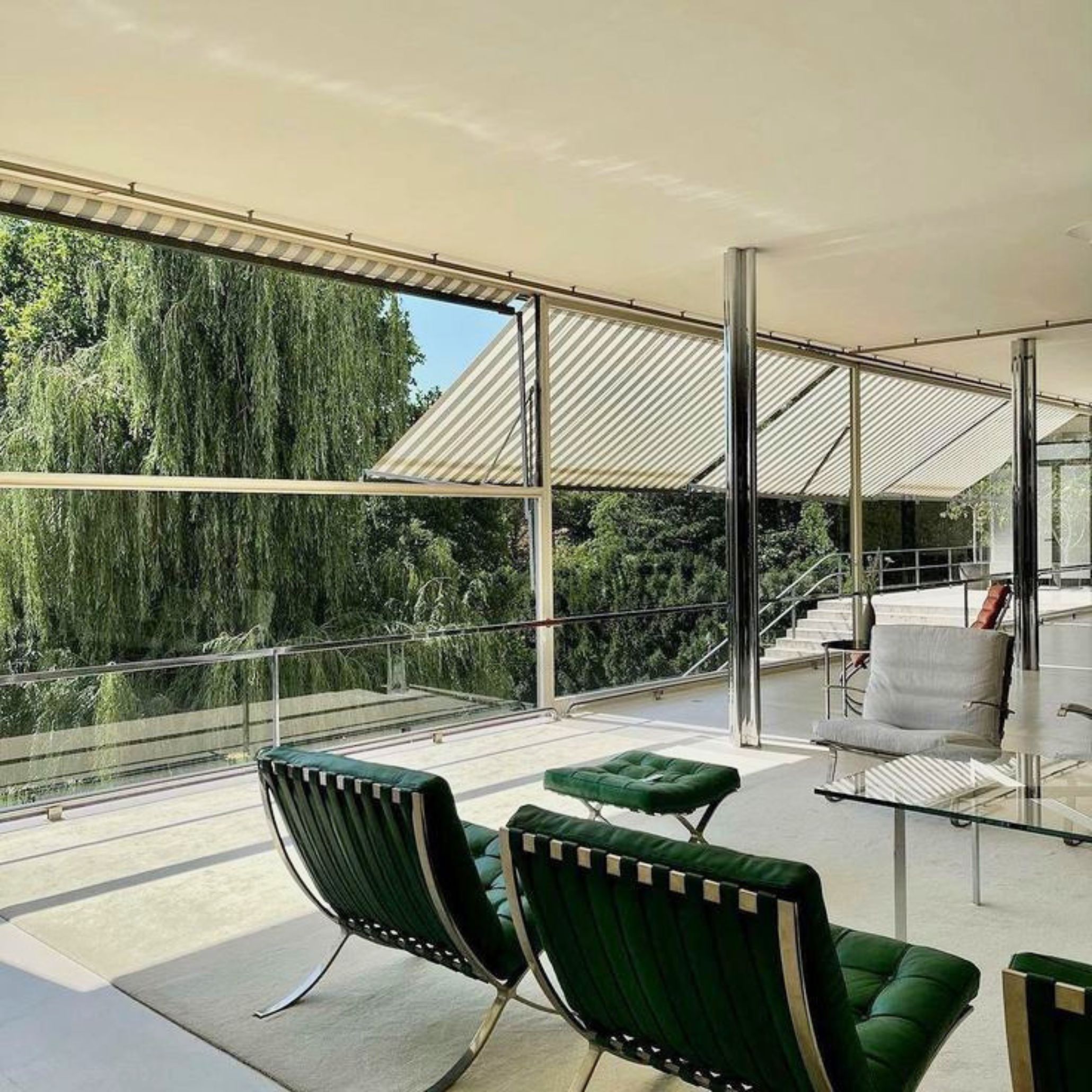
- Living area of Villa Tugendhat | Source: Pinterest
Villa Tugendhat: Materiality and Interior Design
The Villa Tugendhat interior is celebrated for its sophisticated use of materials and light. Mies van der Rohe and Lilly Reich created elegance through natural textures and proportion, creating a space where every surface has a clear architectural role. As Mies van der Rohe expressed, “Each material has its specific characteristics which we must understand if we want to use it. This is no less true of steel and concrete.”
Among the villa’s most iconic elements is the golden onyx wall sourced from the Atlas Mountains in Morocco. Exotic woods such as macassar ebony, polished chrome, and extensive glass surfaces also define the atmosphere of the Tugendhat house.
Bespoke furniture was designed for Villa Tugendhat by Mies van der Rohe and Lilly Reich, reinforcing the connection between architecture and interior design. Pieces such as the Brno Chair and Tugendhat Chair were created to align with the proportions of the space, maintaining visual clarity while supporting functional living. Every object was positioned with intention, contributing to the overall spatial order without adding visual noise.
Natural light plays a central role in the experience of Villa Tugendhat architecture. Large glass façades allow sunlight to move freely through the interior, constantly shifting the appearance of materials and surfaces. This interaction between light and material gives the space a changing character throughout the day, making the interior feel dynamic while remaining structurally calm.
-
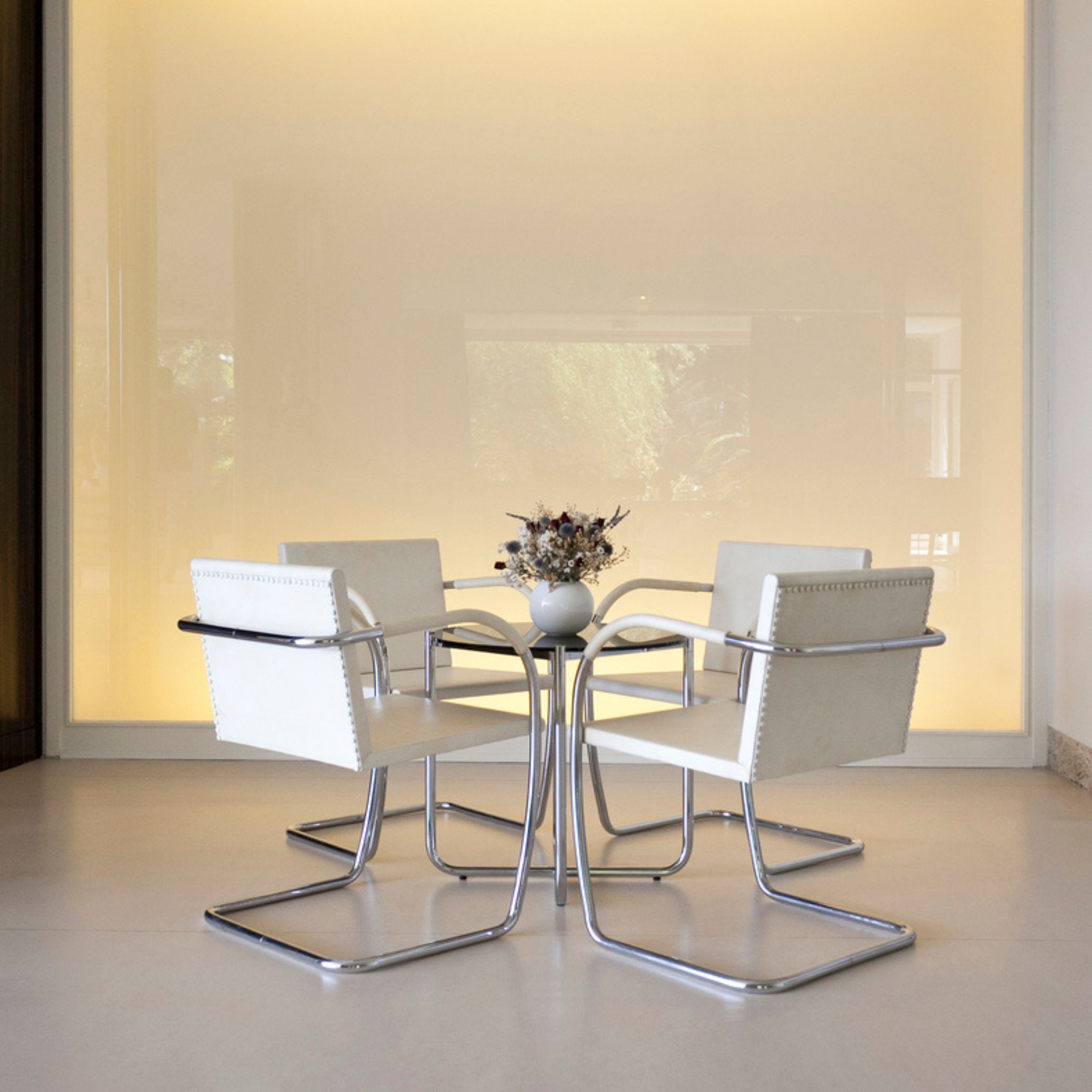
- Dining area inside Villa Tugendhat | Source: Pinterest
-
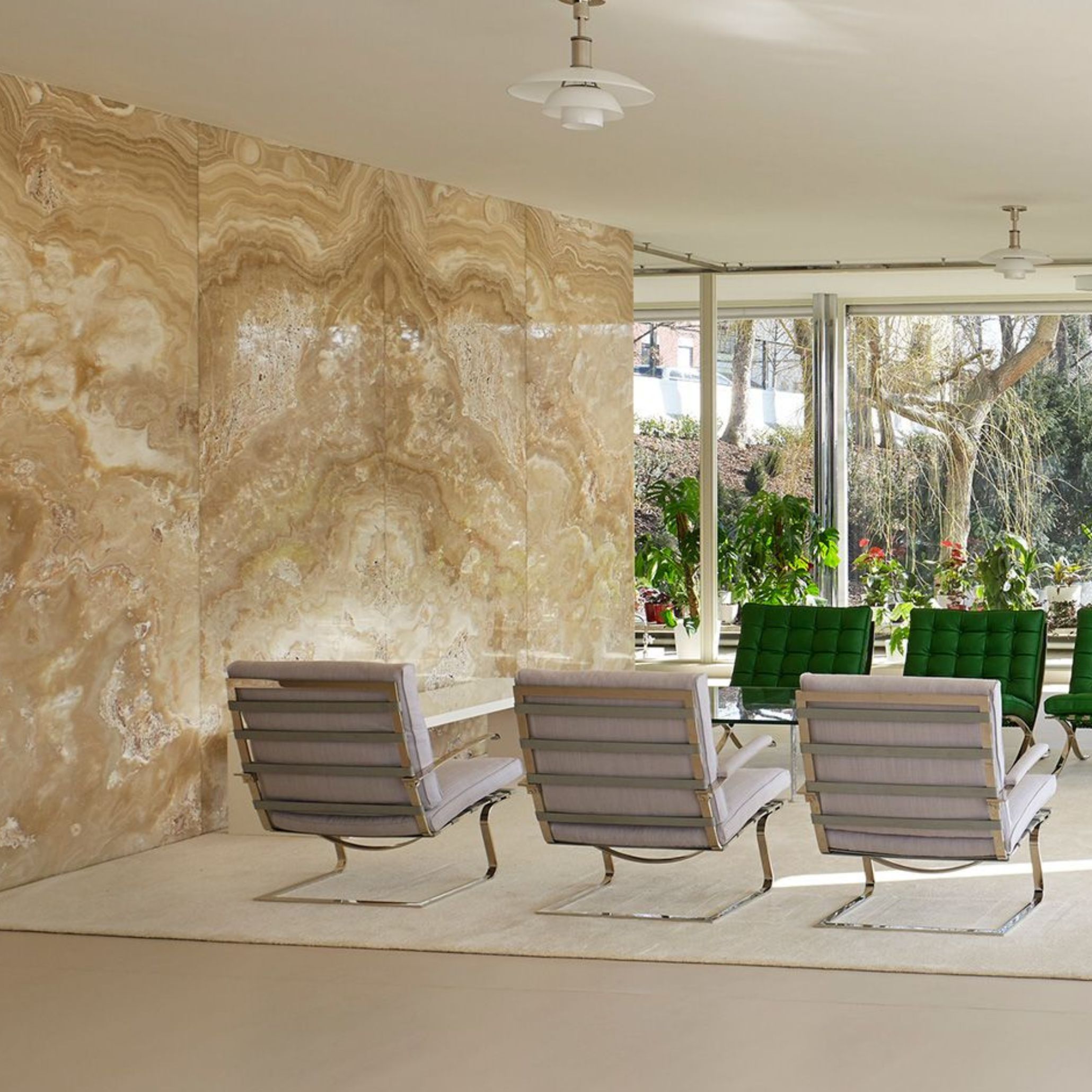
- Living area with onyx wall at Villa Tugendhat | Source: Pinterest
Restoration and UNESCO Recognition
Over time, Villa Tugendhat suffered deterioration caused by war and changing uses. To preserve its architectural significance, major restoration efforts were carried out between 2010 and 2012, carefully recovering original materials and interior elements.
In 2001, Villa Tugendhat Brno was added to the UNESCO World Heritage List due to its importance in the history of modern architecture. The restoration highlighted the importance of preserving modernist buildings and the legacy of Mies van der Rohe Villa Tugendhat.
Today, visitors can explore the restored villa and experience one of the most celebrated examples of functionalist architecture in Europe.
-
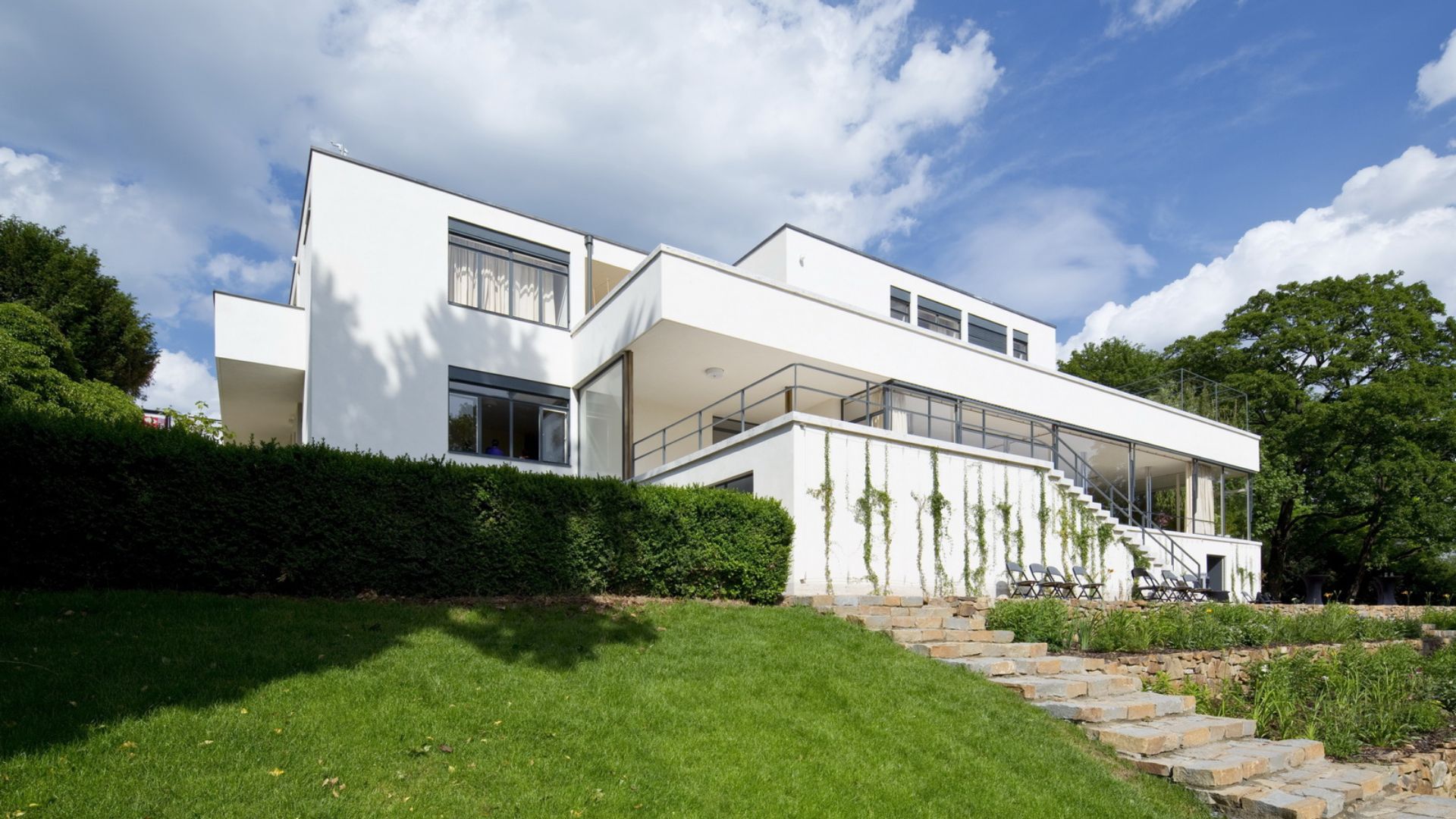
- Restored exterior of Villa Tugendhat | Source: Pinterest
Villa Tugendhat’s Architectural Legacy
Villa Tugendhat continues to influence contemporary architecture through its radical approach to open-plan living, minimalist expression, and integration between interiors and the surrounding landscape.
The principles established by Mies van der Rohe Villa Tugendhat remain central to modern residential design. Transparency through glass façades, the use of natural light as a design tool, and the removal of unnecessary divisions continue to influence homes and interiors today. In Villa Tugendhat architecture, space is defined by proportion and material rather than decoration, a concept that has become foundational in contemporary design thinking.
As a timeless Modernist Masterpiece, Villa Tugendhat confirms the lasting relevance of “less is more”. Nearly a century later, its clarity and spatial intelligence continue to inspire architects and designers seeking to create environments that feel open and intentional.
-
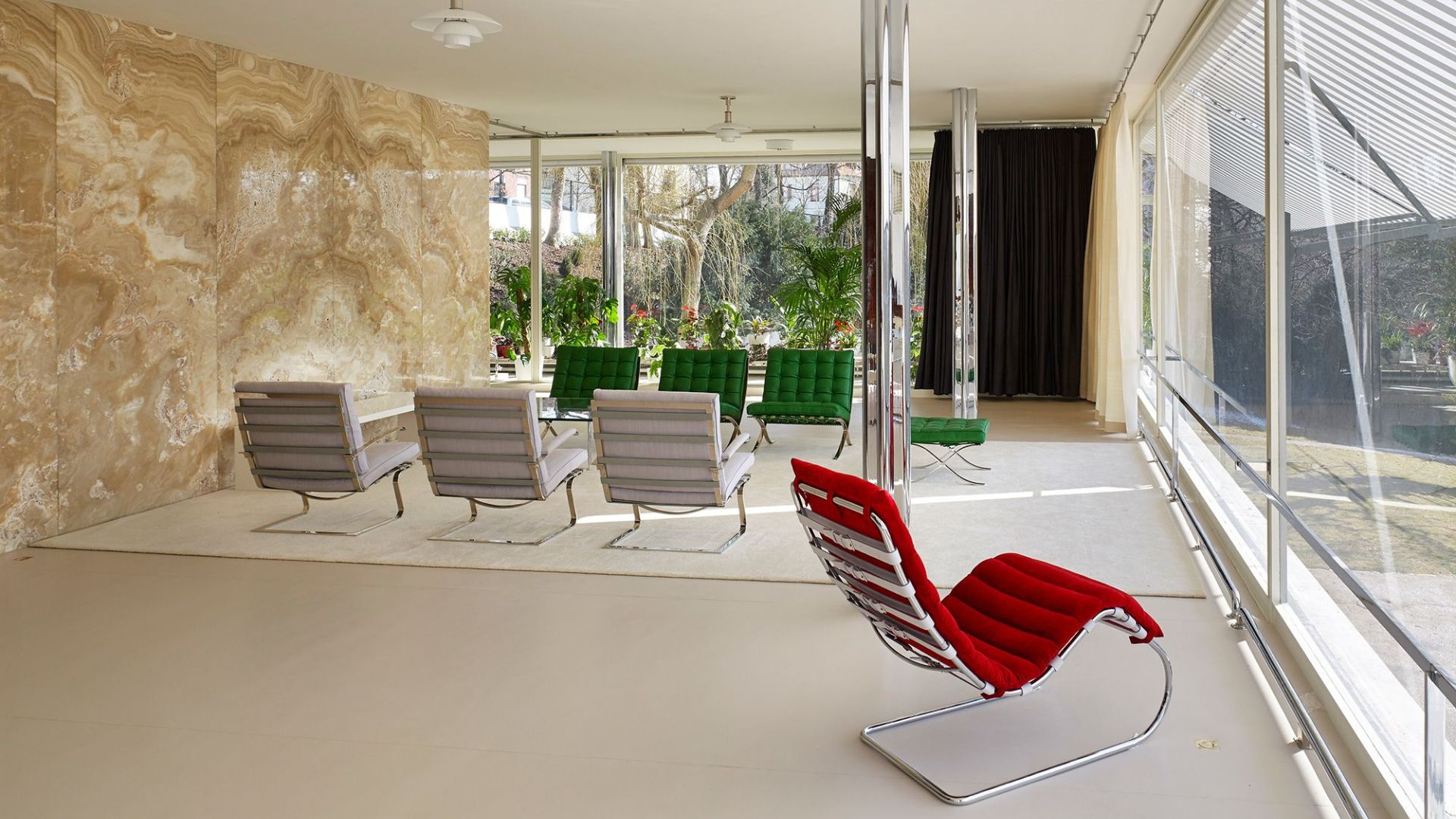
- Modernist living space at Villa Tugendhat | Source: Pinterest