Designing With Nature’s Geometry: The Art of Organic Furniture
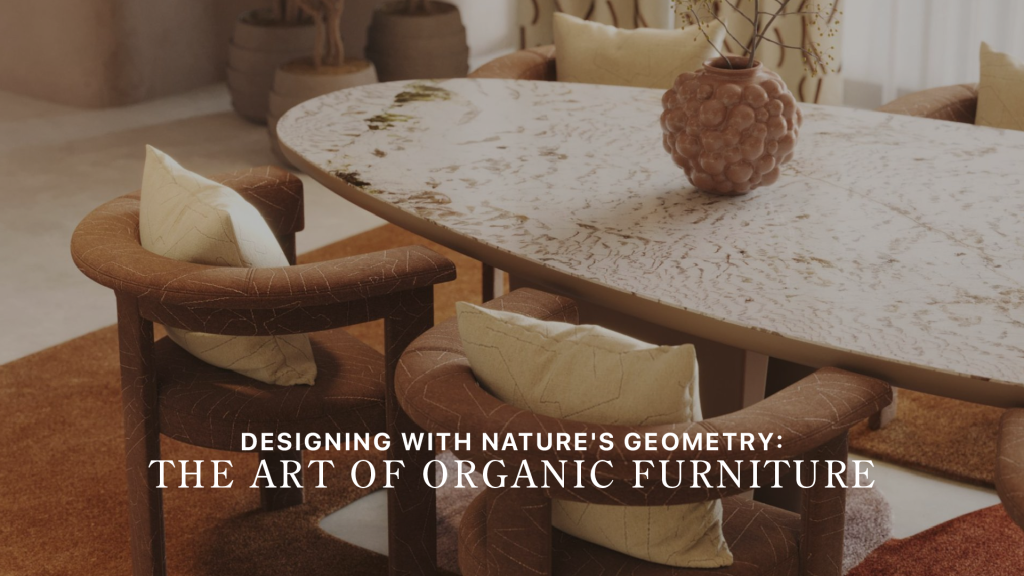
Nature has always been the most elegant designer. Long before human hands shaped wood or stone, the earth was already at work, drawing spirals in shells, tracing veins through rock, and carving silhouettes into mountain stone through centuries of patience. These are not coincidences. They are the language of nature’s design, a quiet mastery that turns pressure and time into breathtaking forms.
A shift is taking place in contemporary interiors. Rigid lines and perfect symmetry are giving way to something softer and more considered. Spaces are becoming places of intention, where each object is chosen not only for what it does but for the atmosphere it creates. In this shift, organic furniture has found its place, allowing nature’s geometry to shape the spaces where life takes place.
This article explores that language: the influence of nature on contemporary furniture design, the poetry of organic forms, and the pieces that translate stone’s enduring geometry into furniture made for living.
-
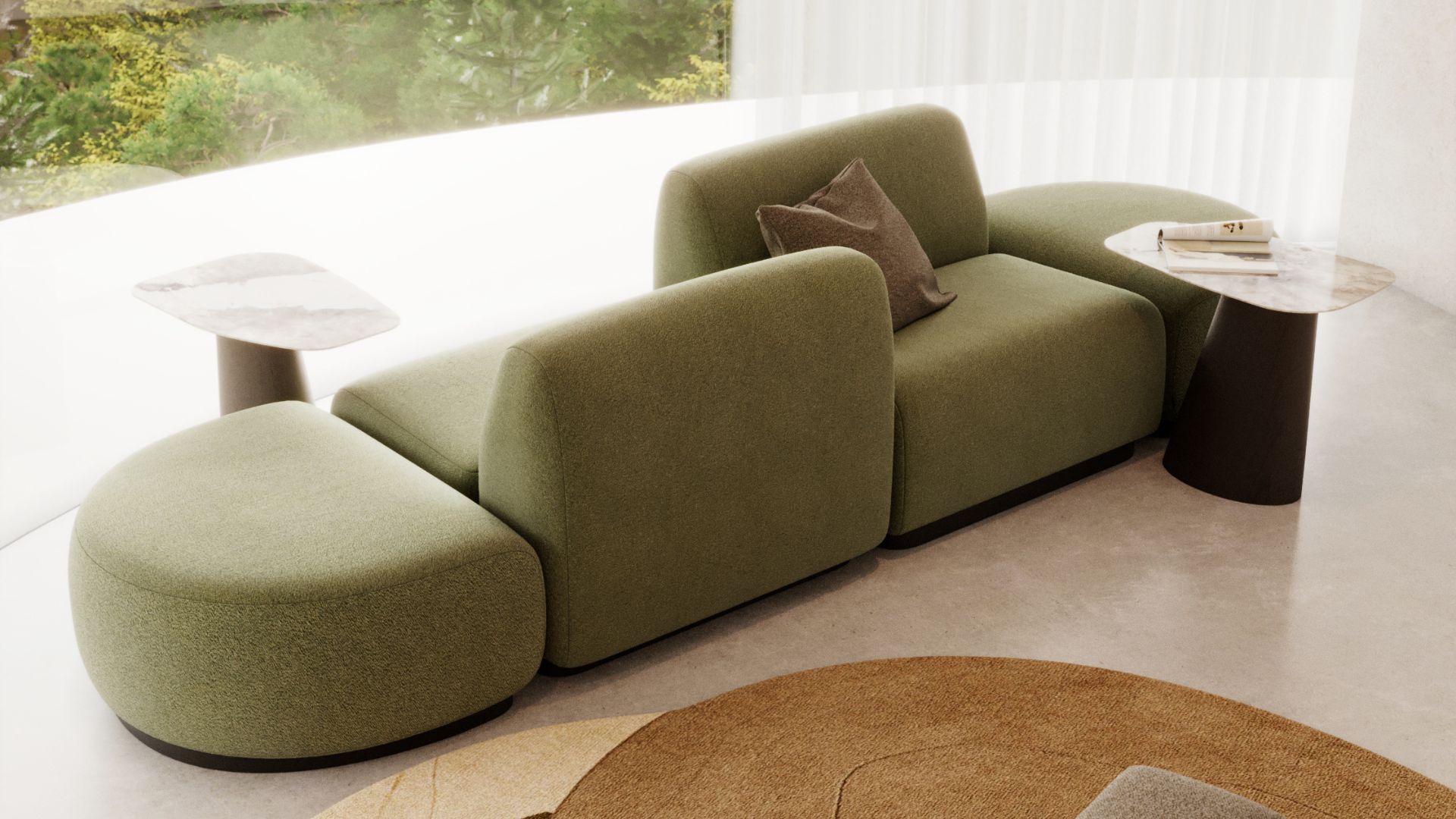
- Organic Forms in Living Spaces: Stone Sofa and Stone Side Table
Nature’s Influence in Contemporary Furniture Design
Nature has become the quiet foundation of contemporary furniture design, not as a passing reference but as a genuine response to how people want to feel at home. As daily life grows increasingly fast and increasingly digital, interiors are becoming places where natural materials and honest forms offer something more grounded and connected to what is real.
This is where contemporary furniture design has found a new direction. Designers are moving away from the machine-perfect and turning to asymmetry, texture, and imperfection as sources of beauty. A surface that carries the natural variation of stone, a silhouette that echoes the curve of a riverbed, a form that feels sculpted rather than manufactured. These are the qualities that define the most considered interiors today.
Nature does not repeat itself. Each stone carries its own grain, its own veins, and its own story. Nature’s design is generous in its variety and precise in its logic. When furniture draws from this logic, it brings something irreplaceable into a space: the sense that an object belongs, not because it was placed there, but because it grew from the same instinct that shapes the world around us.
-
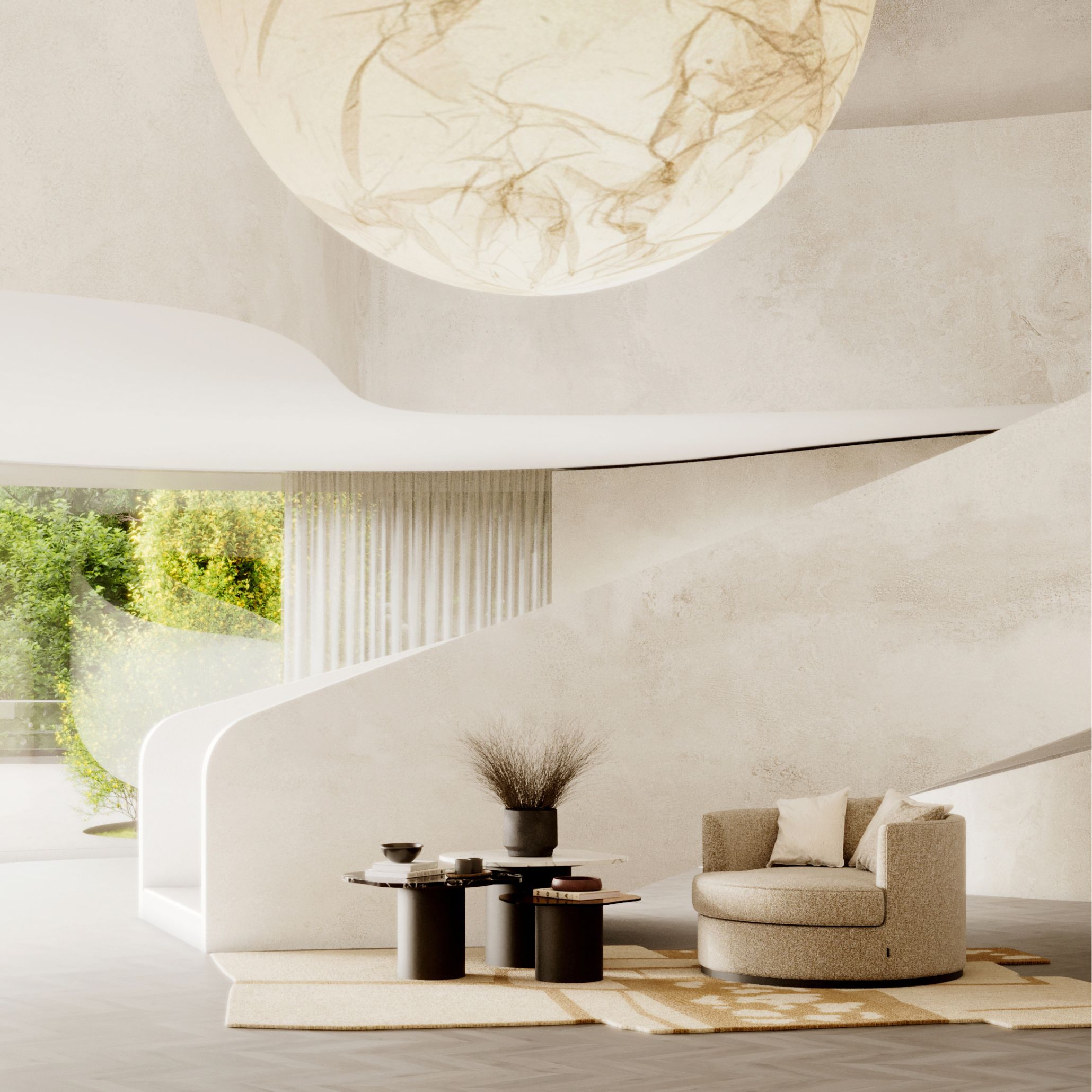
- An Entrance Shaped by Nature’s Design
-
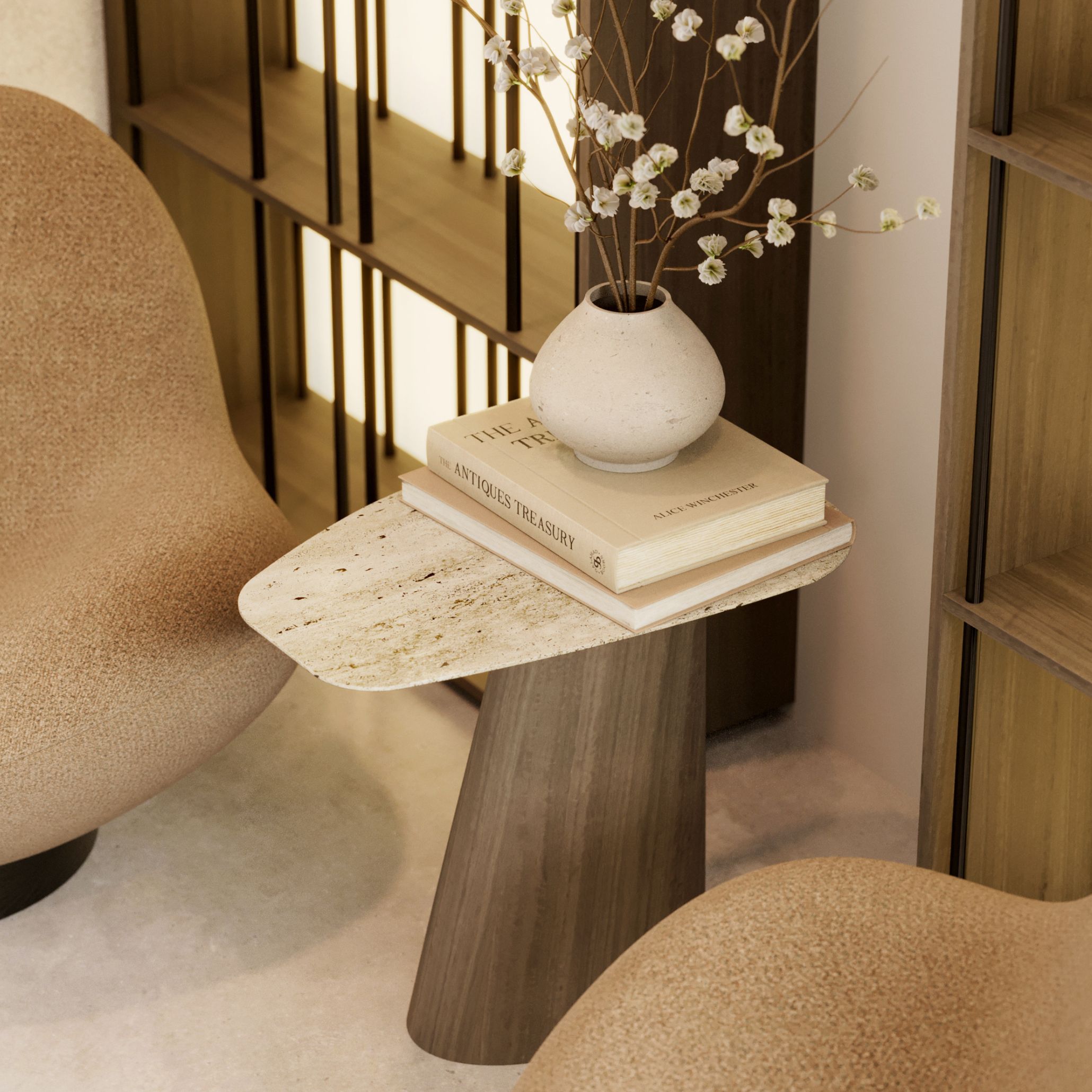
- A Reading Corner with Contemporary Furniture Design
Organic Forms in Interior Design
Organic forms are shaped by curves that follow no rules, drawn from the same patience that smooths stone and bends branches toward light. These shapes do not impose themselves on a room. They settle into it, softening sharp corners and allowing the room to breathe.
There is a reason organic forms feel so familiar. We have always lived among them. The human instinct to find comfort in curved and irregular shapes runs deep, rooted in a relationship with the natural world that no amount of modernity has erased. When organic furniture enters a space, it speaks to that instinct directly, creating an atmosphere that feels alive.
Stone, in particular, carries this quality with rare conviction. Its surface is never perfectly flat, its colour shifts with the light, and each piece holds a history written in veins and mineral patterns that cannot be repeated. In the language of organic forms, stone is perhaps the most expressive material of all.
-
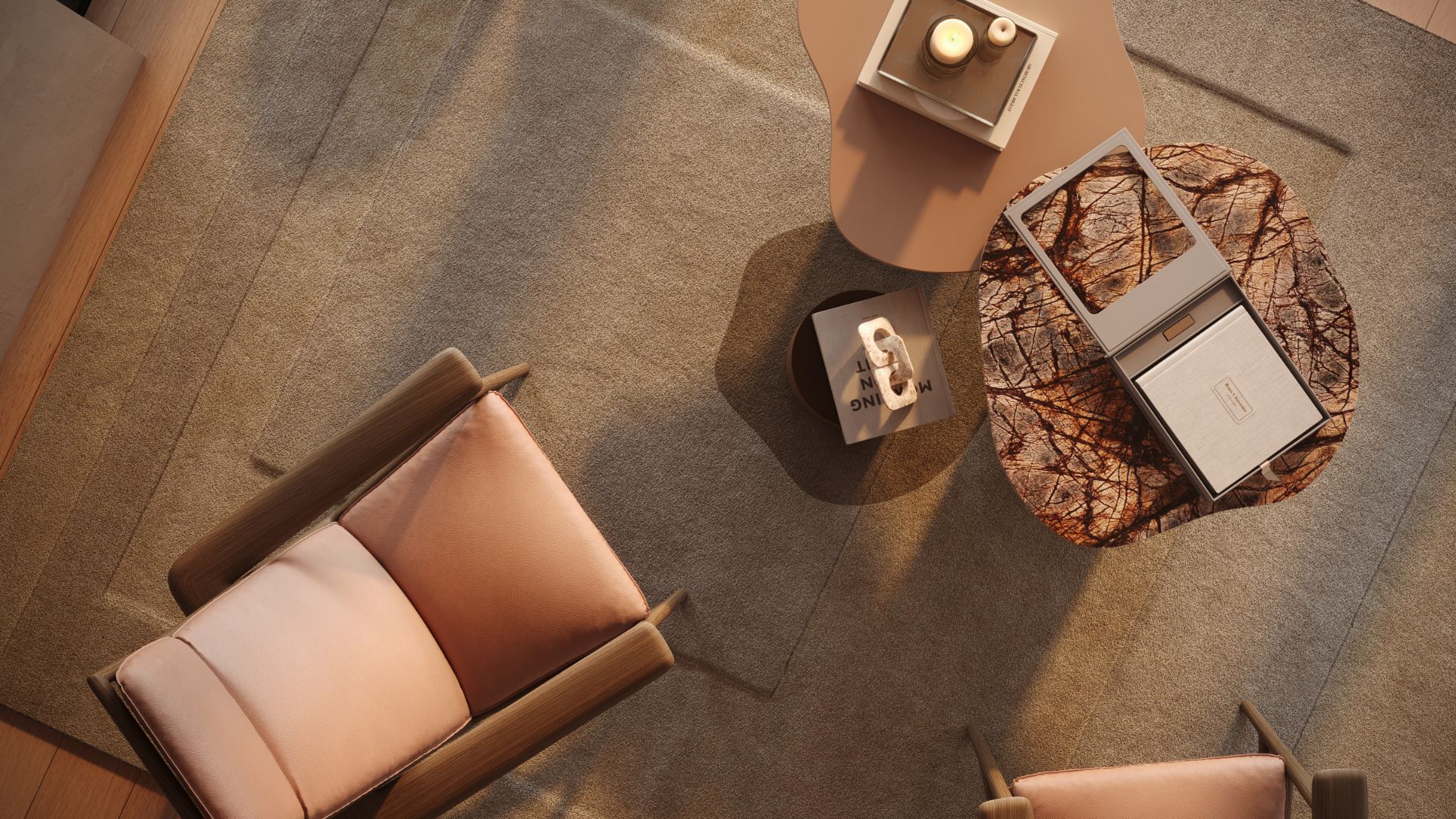
- Quiet Lounge with Organic Silhouettes
The Beauty of Stone in Organic Furniture Design
Stone does not need to be transformed to be beautiful. Its weight, its natural variation and cool surface already carry a presence that is difficult to manufacture. When furniture design works with these qualities rather than against them, the result is furniture that grounds a space through honesty.
Stone Dining Table
The Stone Dining Table draws its inspiration from the slow, deliberate journey of river stones, shaped not by force but by the patient persistence of water. Its organic form follows the natural contours of stone that has been carried by current and time, resulting in a silhouette that feels timeless and considered.
At a dining table, life gathers. Meals are shared, conversations linger, and the ordinary becomes something worth remembering. The Stone Dining Table understands this. Its surface carries the natural variation of the stone from which it was made, every vein a mark of transformation, and every detail a reminder that nature’s beauty is never repeated. As a centrepiece, it holds its place in the room without demanding attention, creating instead a gravitational calm that draws people naturally together.
-
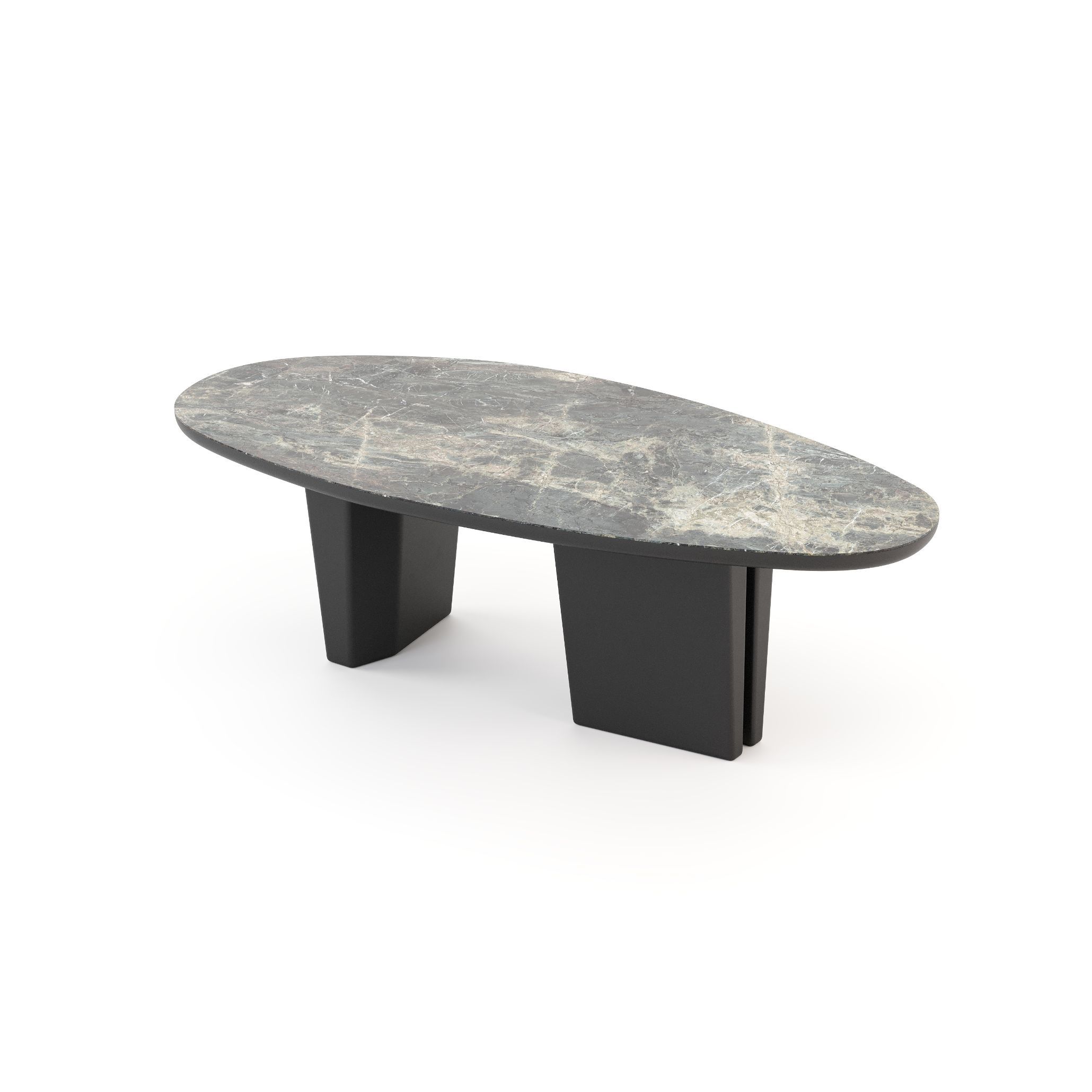
- Stone Dining Table
-
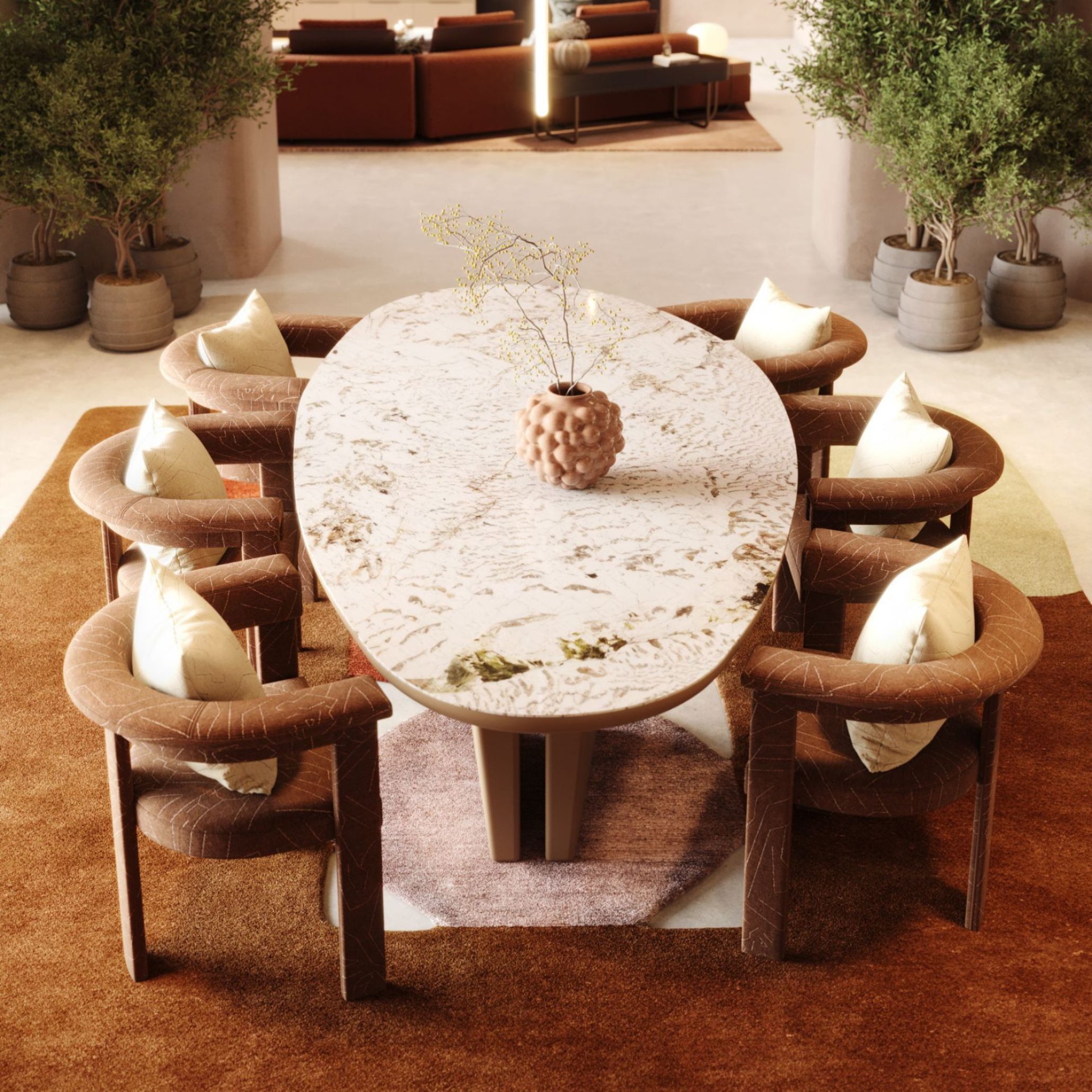
- Contemporary dining room with Stone Dining Table
Dolomites Side Table
Where the dining table holds the quiet weight of a centrepiece, the Dolomites Side Table offers something more intimate. Named after one of the world’s most dramatic natural formations, it carries that same tension between earth and time. Wood and marble come together in a form that recalls the silent geometry of mountain stone, where layers of material have been shaped into a form where pressure becomes beauty.
The Dolomites Side Table does not simply reference nature, it carries it inward. The contrast of textures, the warmth of wood against the cool stillness of marble, mirrors the way light moves across a mountain landscape at different hours. As part of a considered interior, this side table shows that nature’s design operates at every scale, from the grand formation to the quiet detail. Together with the Stone Dining Table, it speaks to how stone can hold its meaning whether it occupies the centre of a room or rests gently at its edge.
-
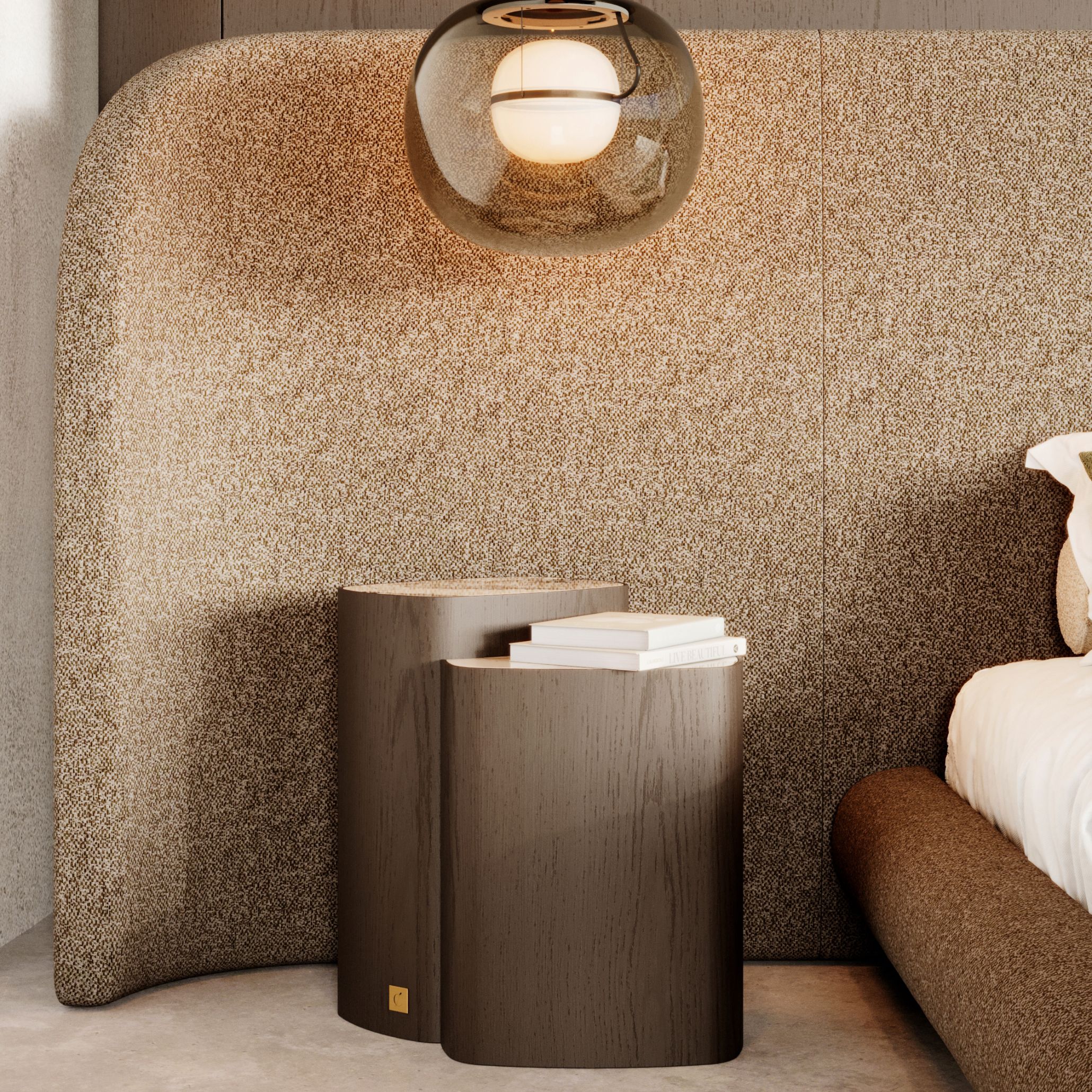
- Neutral Bedroom with the Dolomites Side Table
-
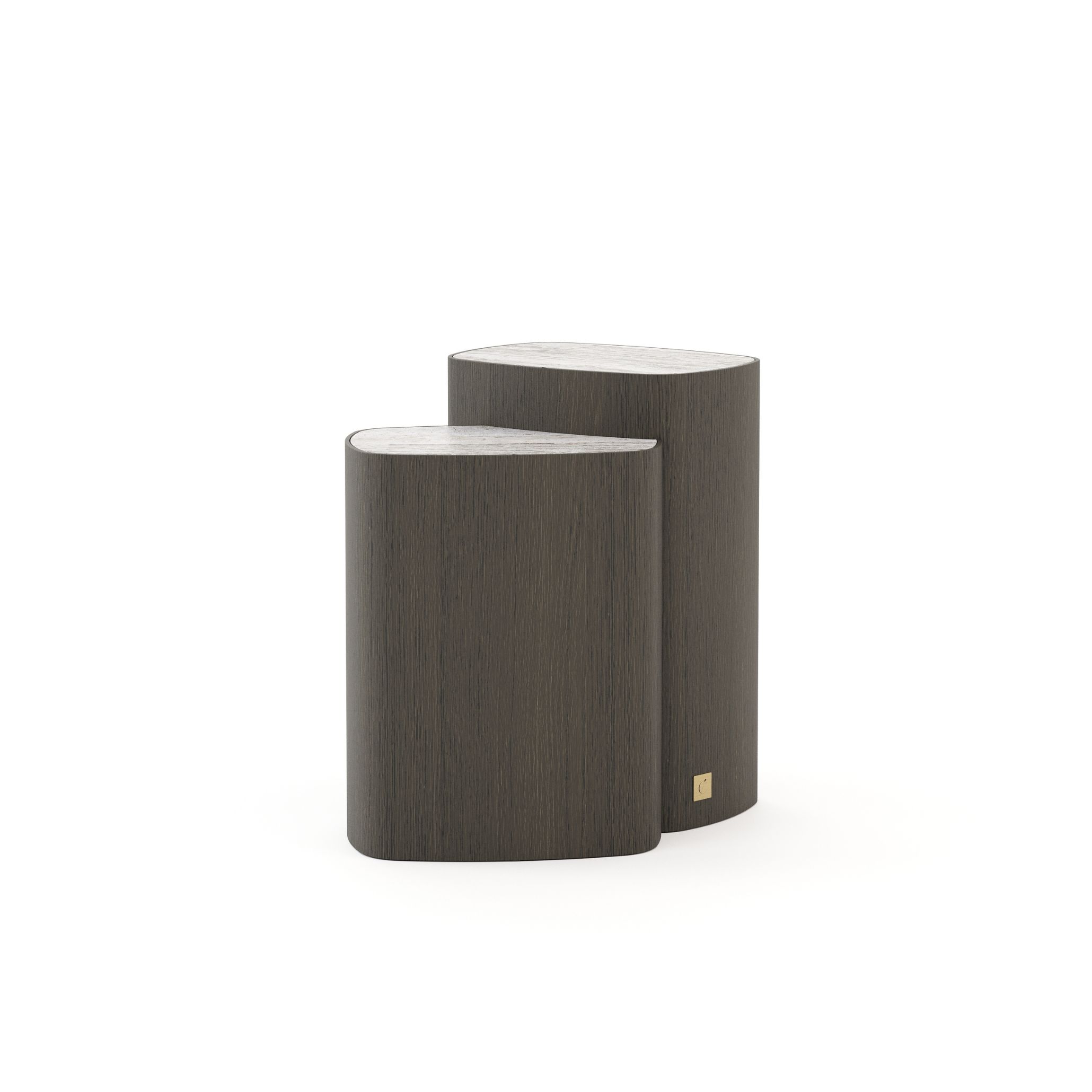
- Dolomites Side Table
Sculptural Form and the Stone Armchair
There are objects that announce themselves, and objects that simply belong. The Stone Armchair is the latter. Its organic, flowing silhouette draws from the same source as the Stone Dining Table: the river stone, shaped by water into something smooth and continuous.
This is what the best organic furniture does. It does not imitate nature. It thinks like nature, arriving at forms that feel inevitable, as though they could not have been otherwise. The Stone Armchair is sculptural in the truest sense: its presence transforms the character of a room without interrupting it. Every curve is considered, every contour an expression of the same organic forms that shape the world.
The craftsmanship is evident in its detail, from the way the upholstery fabric wraps the structure to the quiet precision of each contour. It is a piece of contemporary furniture design that understands restraint, not as emptiness, but as the quality that allows a space to breathe.
-
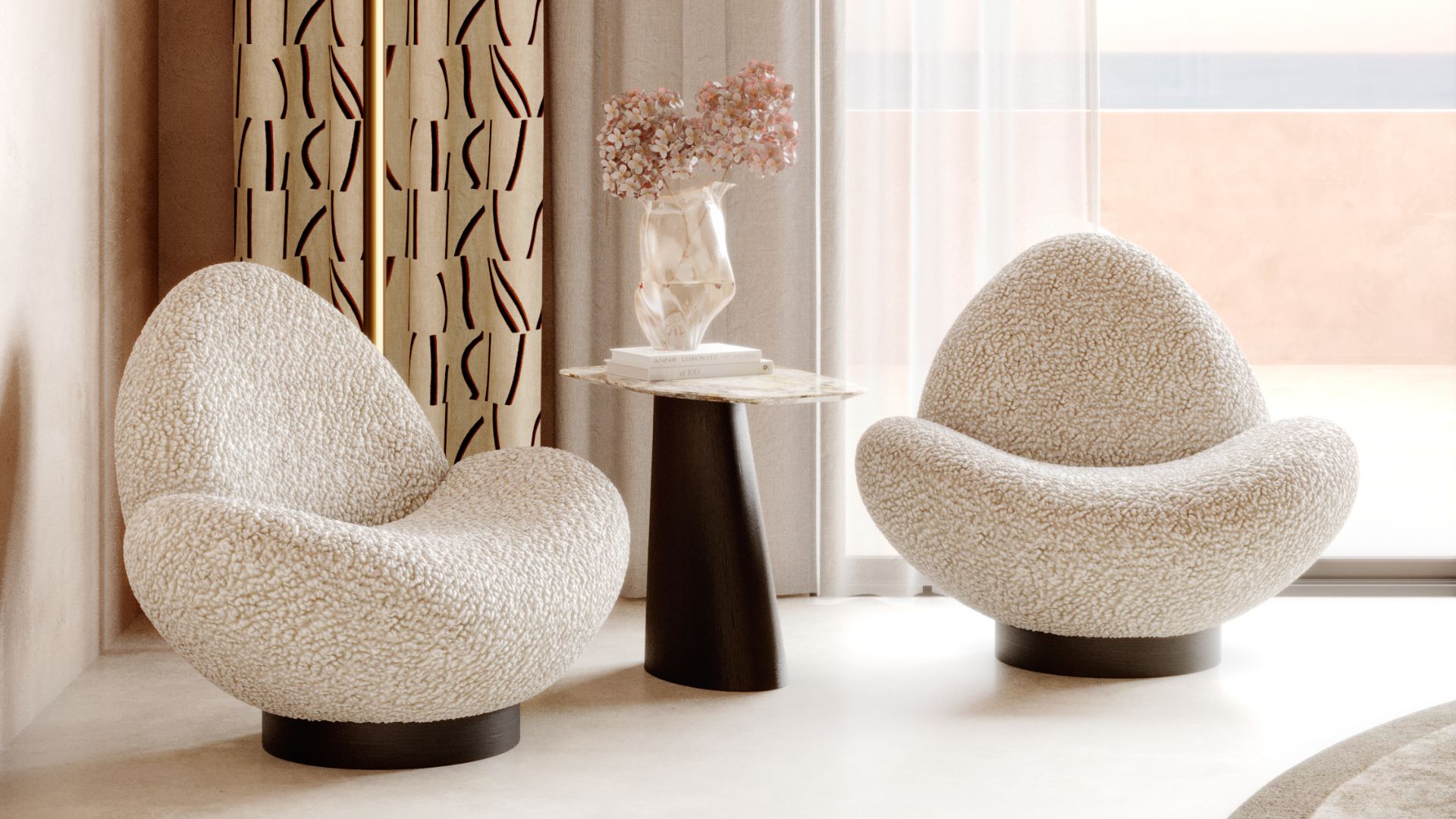
- Serene Corner with the Stone Armchairs
The Stone Dining Table, the Dolomites Side Table, and the Stone Armchair are not simply pieces of furniture design. They are a testament for a different way of living, one shaped by patience, raw material, and a deep attention to the forms that nature has spent centuries perfecting. To bring them into a home is to invite that honesty in, and to allow the space to become something quieter and more alive.