Vincent Van Duysen | The Beauty of Simplicity
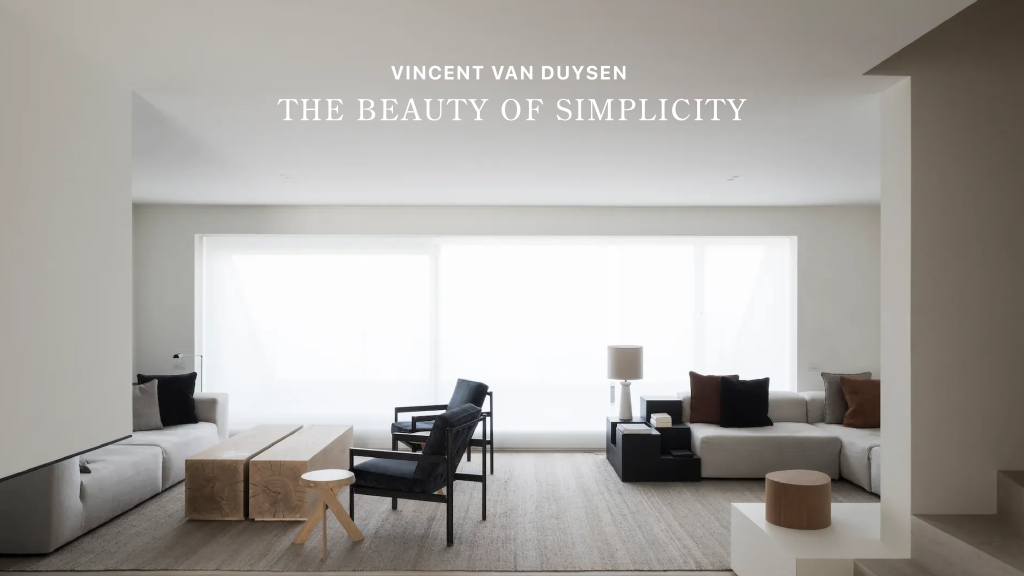
In a world where architecture often speaks loudly, Vincent Van Duysen chooses silence. His work does not seek to impress, it seeks to be felt. Across residential, hospitality, retail, and office projects, Vincent Van Duysen architecture reveals a consistent and deeply human pursuit: spaces where simplicity is not an absence, but a presence in itself.
This article explores the principles, materials, and projects that define Vincent Van Duysen interior design, from his studies in Belgium and Milan to iconic works around the world. It is an invitation to understand why, in an age of excess, the beauty of simplicity remains the most powerful architectural statement of all.
-
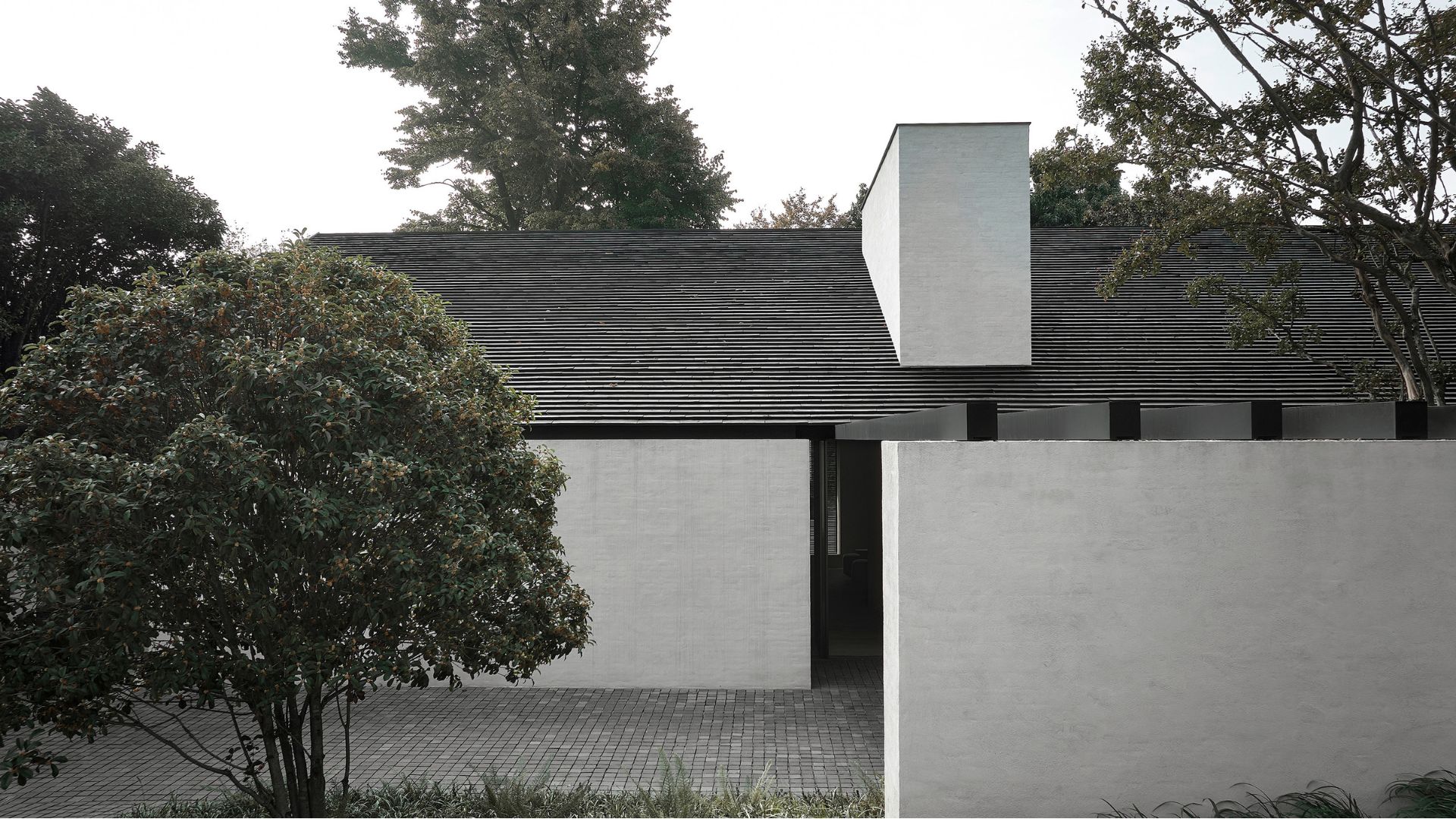
- The Beauty of Simplicity of the B Residence | Source: Vincent Van Duysen
Who Is Vincent Van Duysen?
Vincent Van Duysen was born in Lokeren, Belgium, in 1962. He studied architecture at the Sint-Lucas School of Architecture in Ghent, before moving to Milan to work alongside Aldo Cibic, a period that sharpened his understanding of craft, material, and space. He later collaborated with Jean De Meulder in Antwerp, and in 1989, established Vincent Van Duysen Architects.
Today, the studio has grown to approximately 40 collaborators, with projects spanning Europe, the Middle East, Asia, and the United States. Architecture, interior, and product design have always been treated as a single discipline, each informing the other in a constant search for essence.
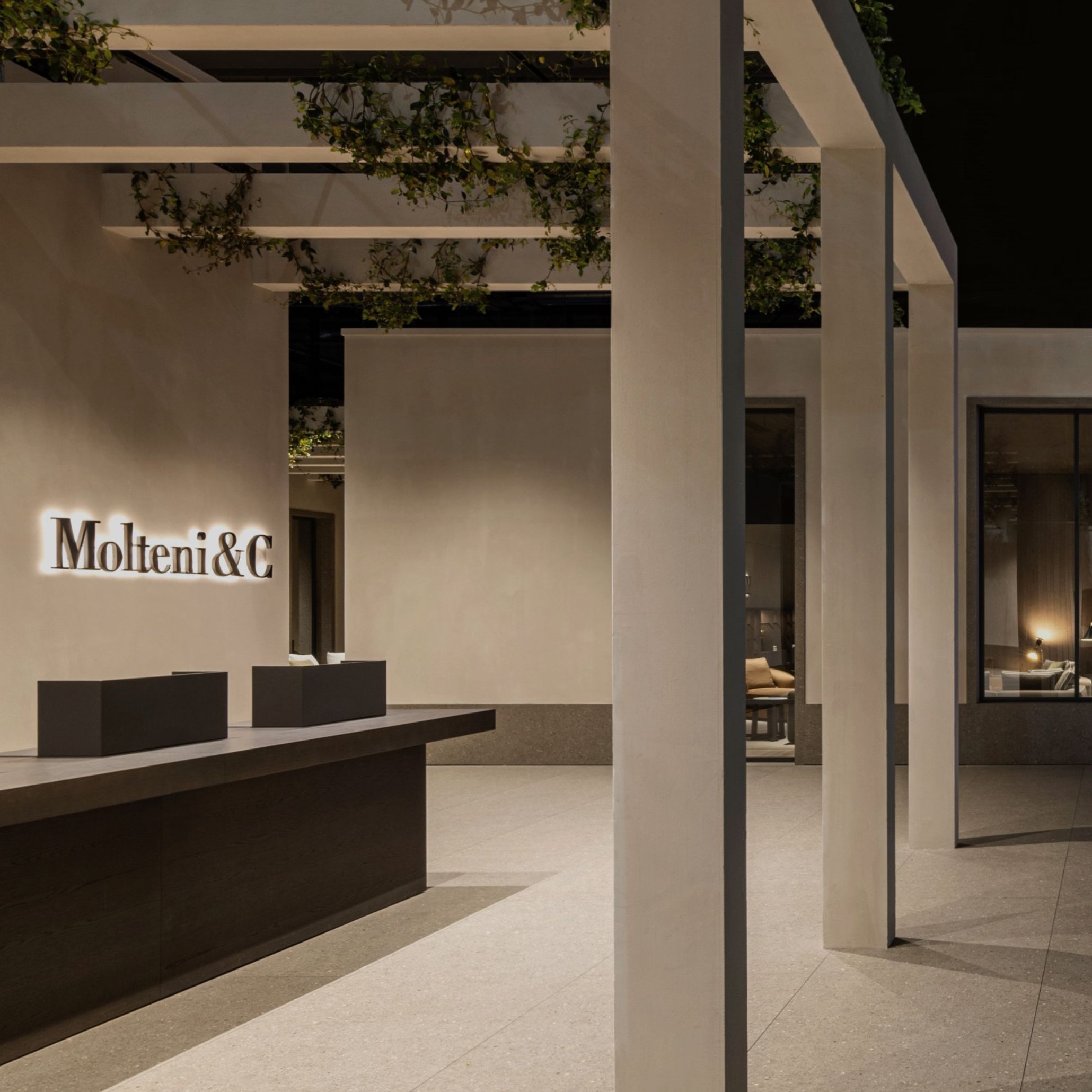
In 2016, Van Duysen was appointed Creative Director of Molteni&C, extending his vision across architecture, product development, and brand identity on a global scale. His work has been recognised with the Flemish Culture Prize for Design, the Henry van de Velde Lifetime Achievement Award, an EDIDA for Best Interior Designer of the Year, and a shortlist for the Mies Van Der Rohe Award. His name appears regularly on Architectural Digest’s AD100 and the Elle Decor A-List, a testament to a career built not on trends, but on conviction.
-
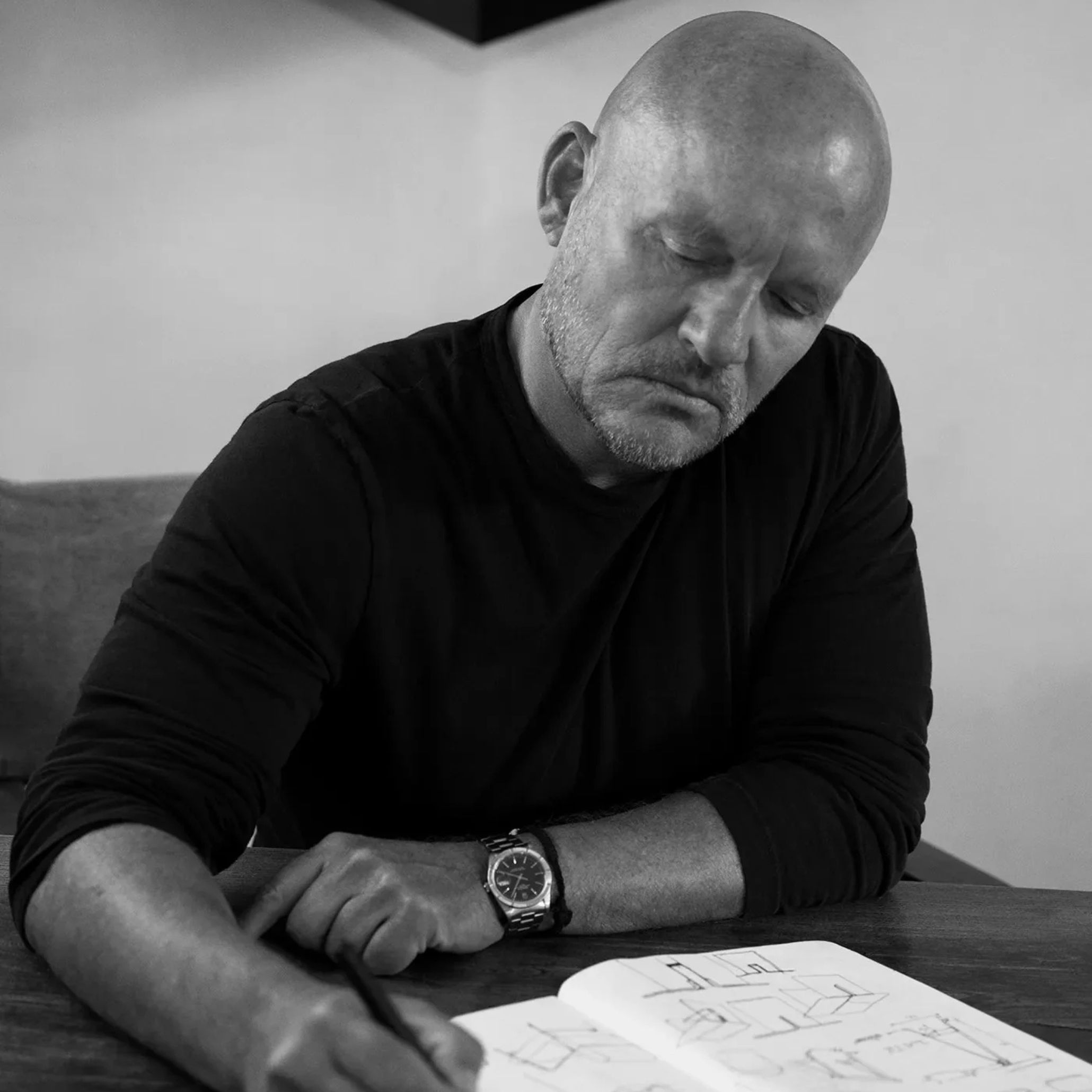
- Vincent Van Duysen Sketching | Source: Pinterest
-
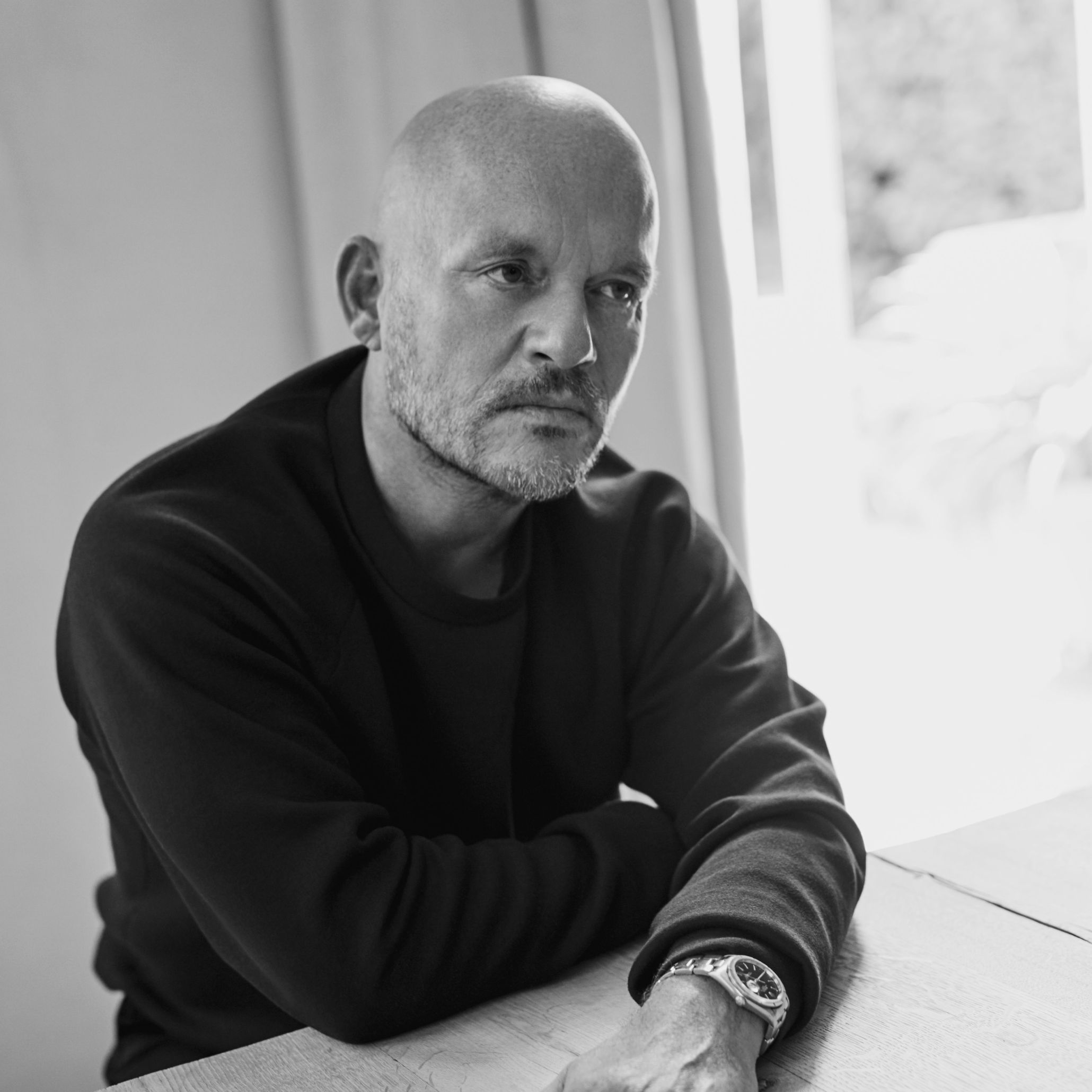
- Black and white portrait of Vincent Van Duysen | Source: Vincent Van Duysen
The Philosophy Behind Vincent Van Duysen Architecture
Vincent Van Duysen builds on a quiet but firm conviction: that a space should make people feel at ease before it makes them look twice. His architecture does not compete for attention. It earns it through proportion, material, and restraint, a quality often described as visual silence.
At the core of Vincent Van Duysen architecture is the idea of subtraction. Every project begins with more than it needs and is gradually stripped back until only what is essential remains. Each element that survives must justify its presence. What is left is architecture that feels inevitable.
Functionality, durability, and comfort are never set aside in favour of aesthetics. For Van Duysen, they are the foundation of it. His concept of noble simplicity runs counter to the visual noise of contemporary culture, spaces that carry the marks of time rather than resist them, that invite the people within them to slow down and truly inhabit.
-
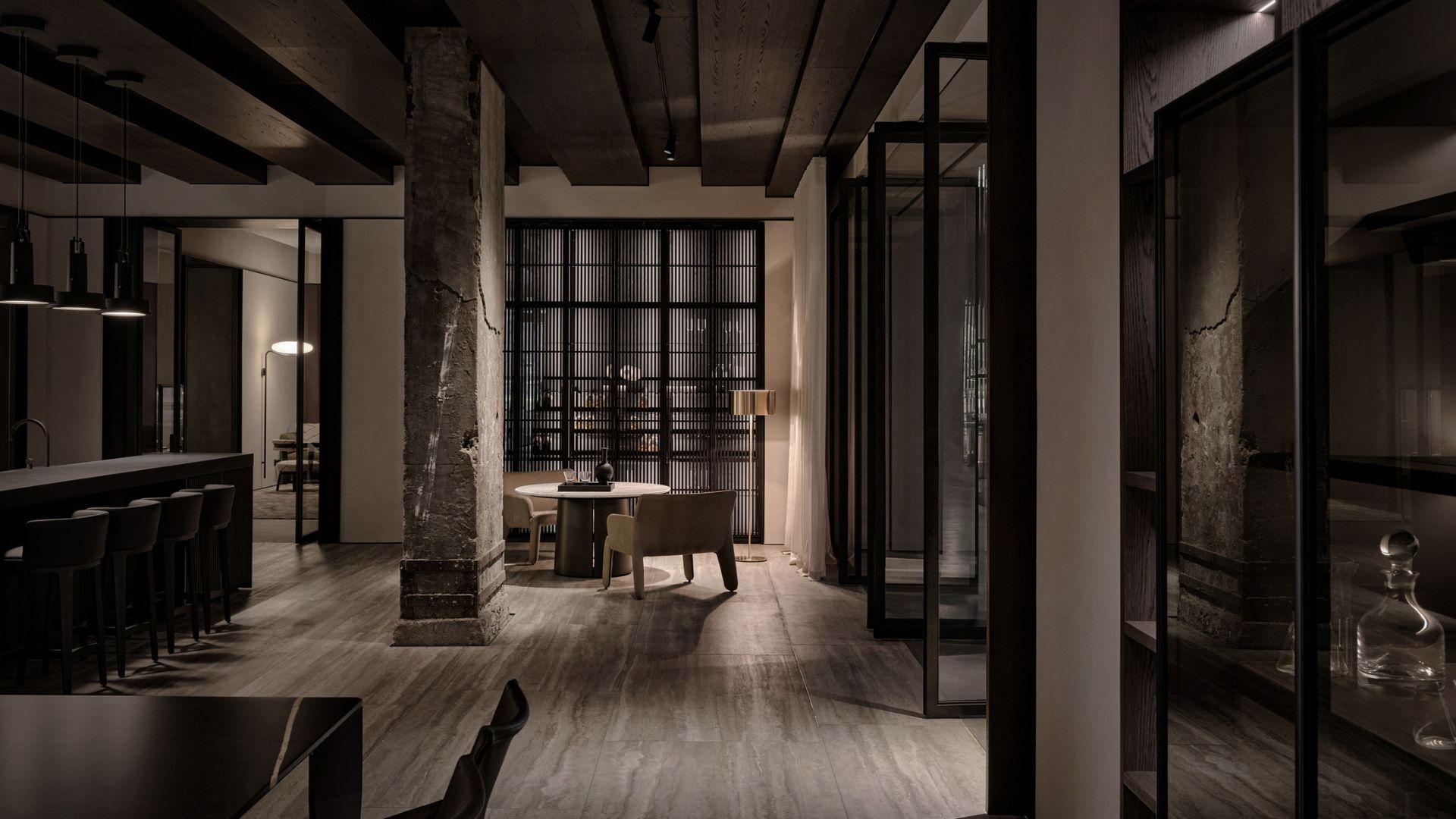
- Vincent Van Duysen’s Philosophy at the Molteni&C Shanghai Showroom | Source: Vincent Van Duysen
The Signature Style of Vincent Van Duysen Interior Design
Vincent Van Duysen interior design is defined by a careful balance between restraint and comfort. His spaces are never shaped by decoration alone. Instead, they emerge from architecture itself, where proportions, volumes, and materials establish the atmosphere long before furniture or objects are introduced. What remains is a sense of calm that feels both timeless and deeply human.
Light plays a central role in this language. For Van Duysen, it is not simply a practical necessity, but a material in its own right, one that reveals textures, softens surfaces, and transforms a space throughout the day. Combined with neutral palettes and tactile materials, light becomes an essential tool in creating interiors that feel warm rather than austere.
Whether designing a retail environment such as Zara Diagonal in Barcelona or workplaces like M Offices in New Delhi, Vincent Van Duysen applies the same principles of spatial clarity, material honesty, and human scale. Across every typology, his interiors invite a slower way of living, proving that simplicity can be both elegant and profoundly welcoming.
-
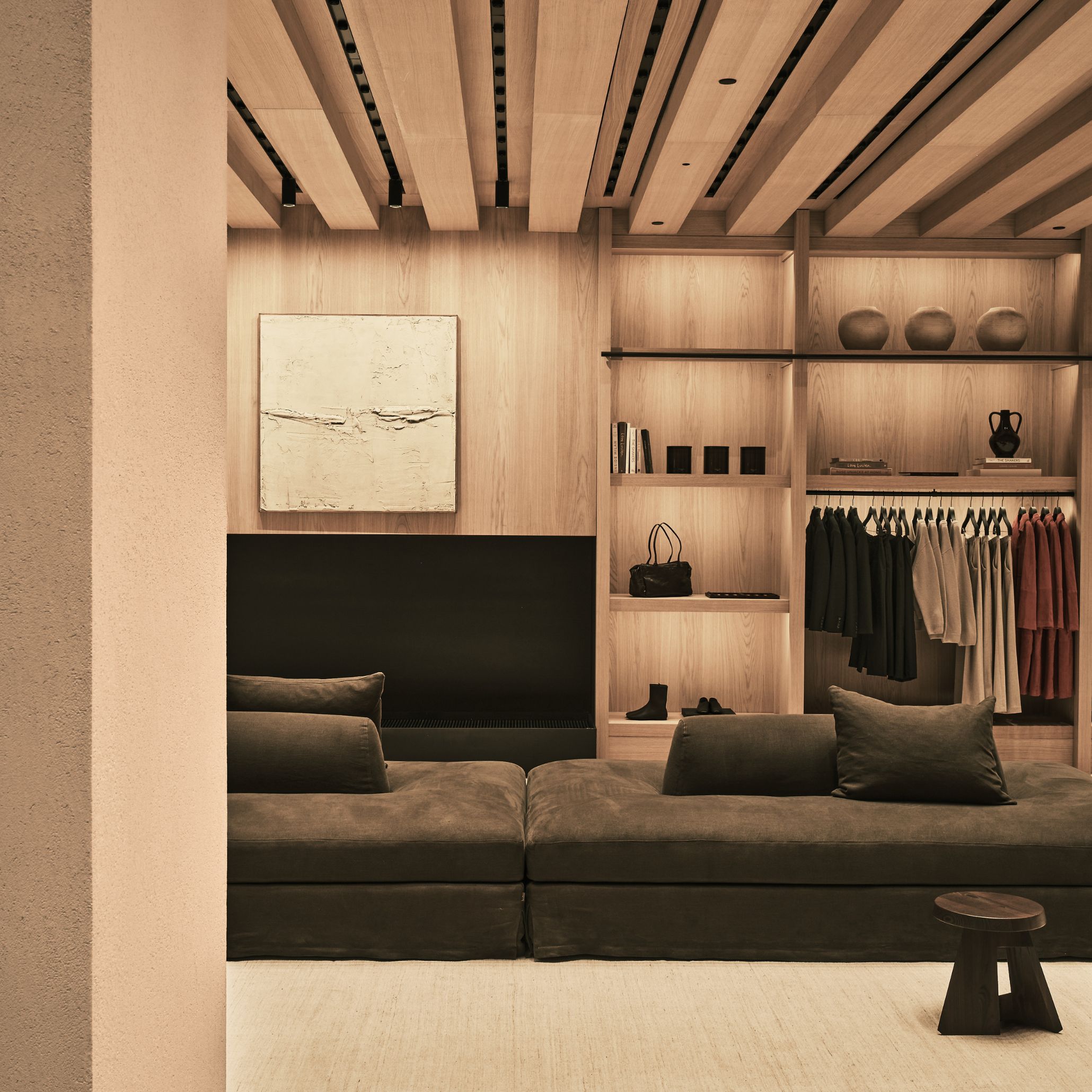
- Zara Diagonal in Barcelona | Source: Vicent Van Duysen
-
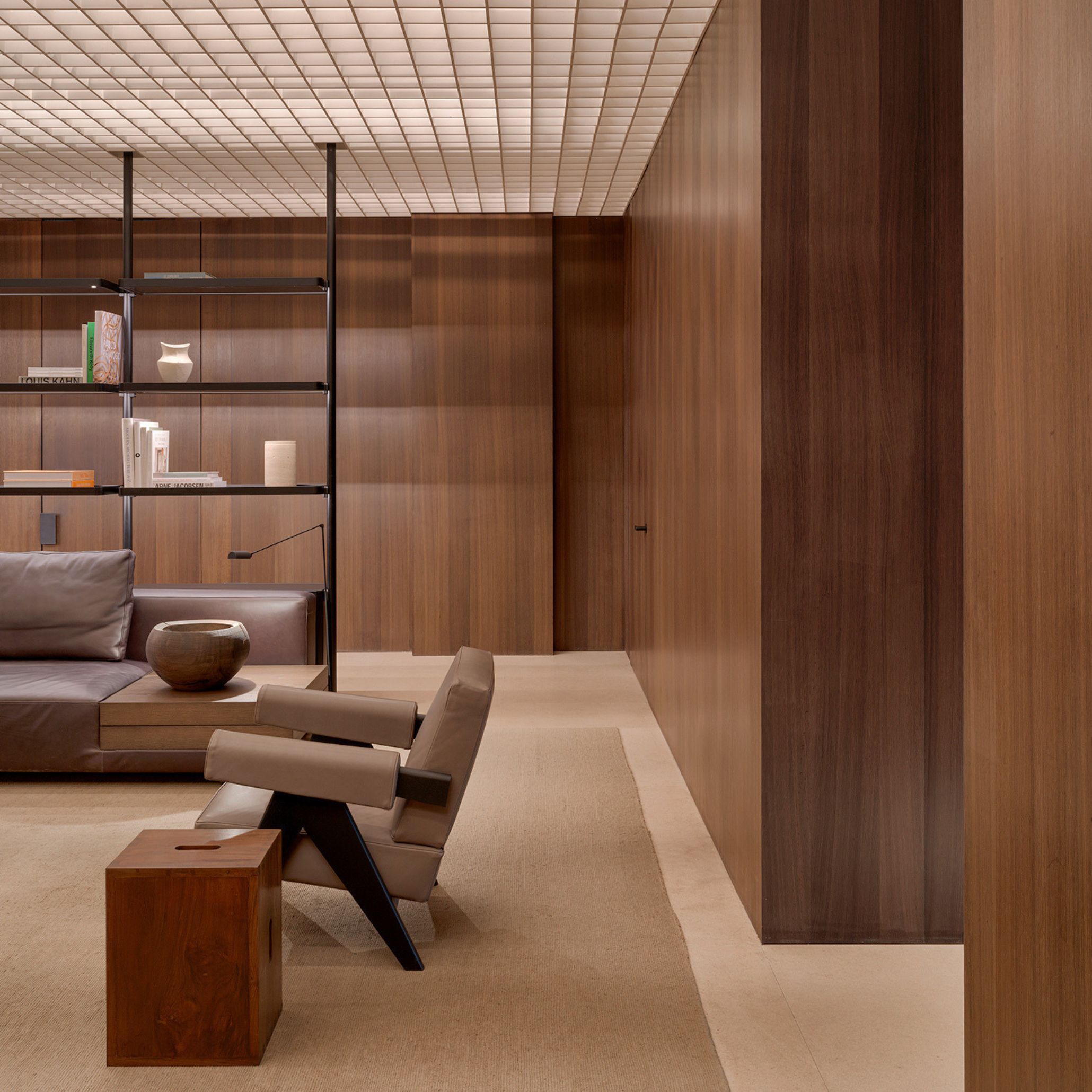
- M Offices in New Delhi | Source: Vincent Van Duysen
Materiality as the Soul of Design
If there is a constant thread running through all of Vincent Van Duysen’s work, it is the primacy of material. Stone, marble, wood, plaster, linen, leather, each one chosen not for appearance alone, but for weight, texture, and how it will age over time. These are materials that carry memory.
Colour in Vincent Van Duysen interior design is kept deliberately restrained. Walls and surfaces recede, allowing the material itself, and the light falling across it, to define the atmosphere. There is no need for visual complexity when the texture of a stone wall or the grain of aged wood already holds the attention.
This material discipline connects directly to Van Duysen’s broader philosophy. A space built in limestone and warm wood does not belong to a particular moment. It matures with time, gaining depth and character through use and inhabitation. This is what gives Vincent Van Duysen architecture its sense of quietude: not the absence of character, but the presence of something that does not need to announce itself.
-
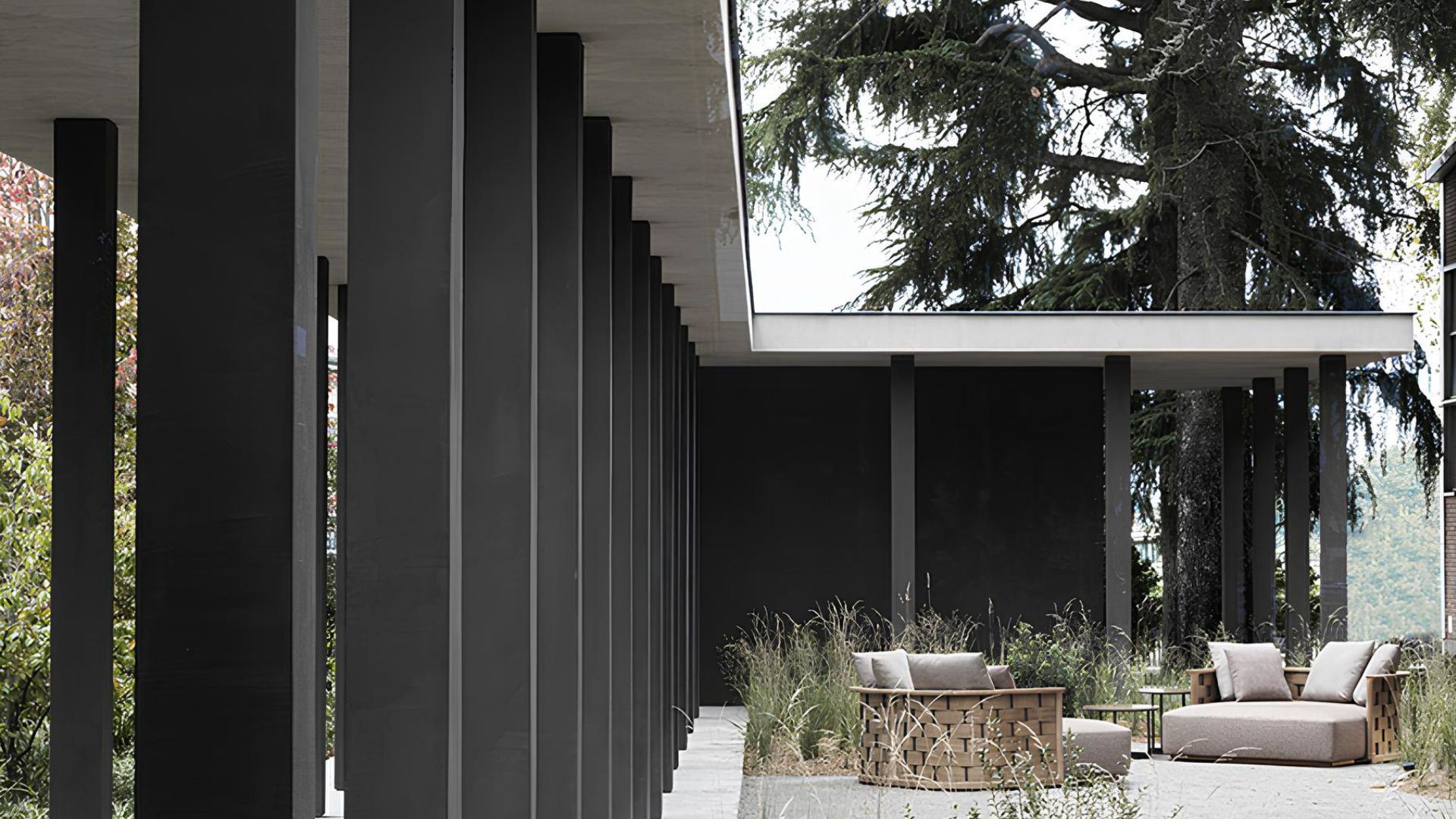
- Vincent Van Duysen’s Materiality Philosophy | Source: Vincent Van Duysen
Iconic Projects by Vincent Van Duysen
Vincent Van Duysen architecture spans a remarkable range of typologies: residential homes, hospitality destinations, retail environments, offices, and cultural commissions. Across all of them, the same spatial intelligence is at work: a commitment to context, material, and the experience of the person within the space.
Palazzo Molteni Tokyo | Tokyo, Japan
Palazzo Molteni Tokyo represents the first architectural project by Vincent Van Duysen in Japan, and a significant milestone in his ongoing creative direction of Molteni&C. Located in Minami Aoyama, the building was conceived not as a conventional retail space but as a true house for the brand, an architectural expression of lifestyle and design culture.
The building reads as a monolithic, sculptural volume, where the façade directly reflects the organisation of the interior spaces. Solid masses are interrupted by generous full-height openings, terraces, and framed views, producing a dynamic rhythm that remains quiet and geometric. A subtle inspiration drawn from the Katsura Imperial Villa in Kyoto informed the façade’s compositional logic, a respectful dialogue between European design culture and Japanese architectural heritage.
-
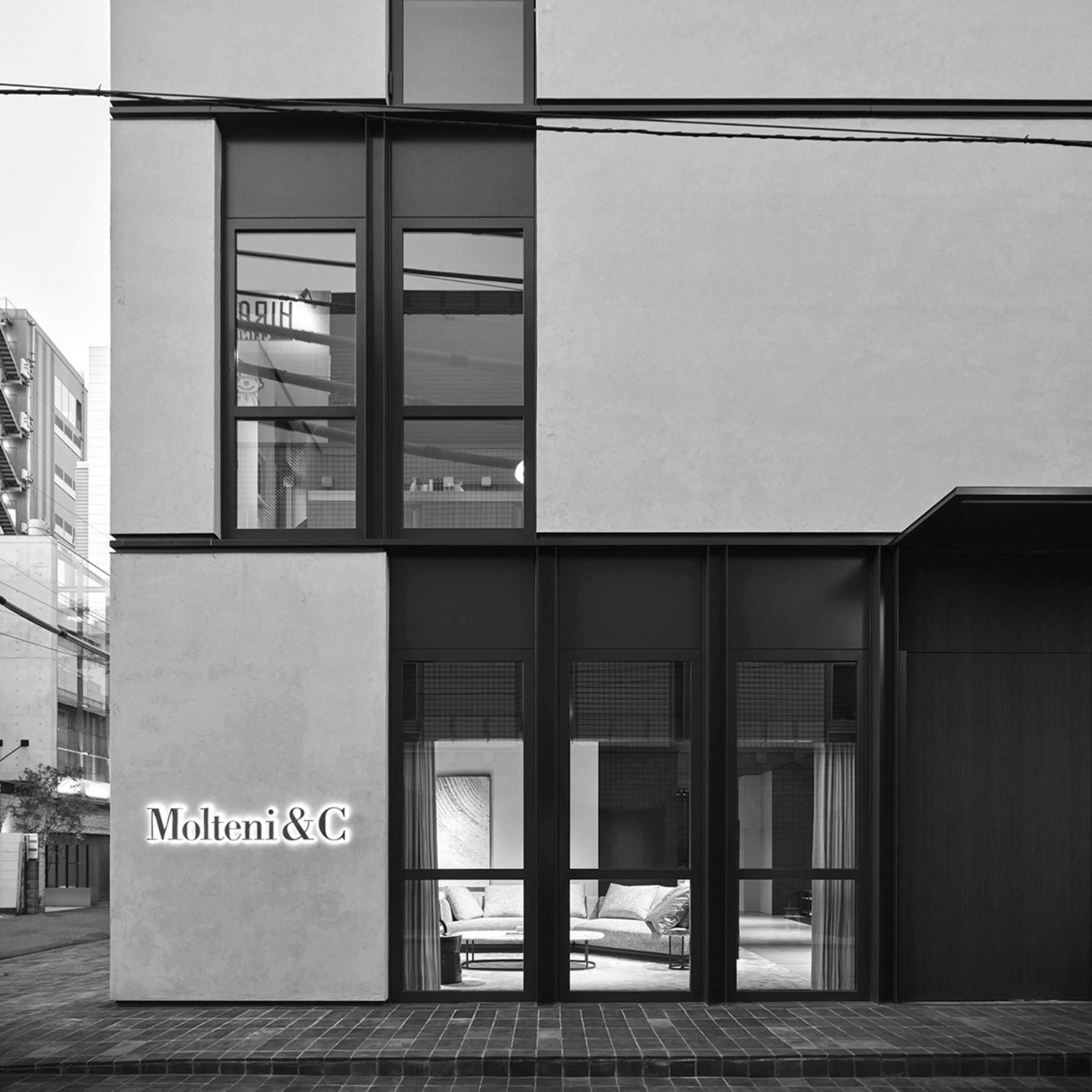
- Palazzo Molteni Tokyo Façade | Source: Vincent Van Duysen
-
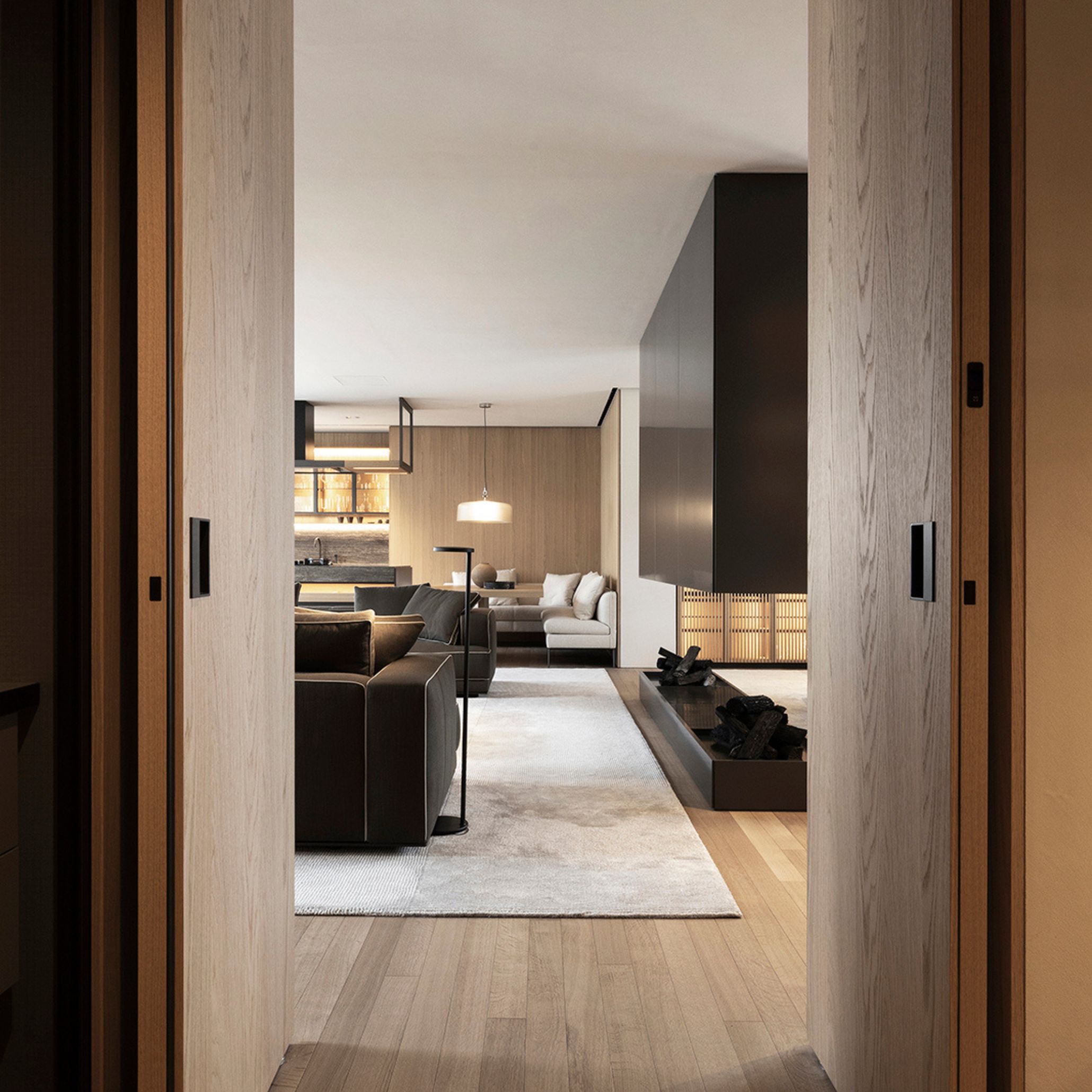
- Interior of the Palazzo Molteni Tokyo | Source: Vincent Van Duysen
JNcQUOI Beach Club | Comporta, Portugal
Set along the shores of Praia do Pego in Comporta, the JNcQUOI Beach Club is Vincent Van Duysen architecture in dialogue with one of Europe’s most extraordinary natural landscapes. The project draws its vocabulary from local fishermen’s vernacular and the historical context of the Alentejo coast, a restrained, site-specific response to a place that asks not to be overwhelmed.
A palette of stained wood and canes keeps the structure close to its surroundings. Soft fabrics add another layer of warmth along the perimeter lounging and dining areas. The exterior remains quiet and absorbed into the landscape, while the interior offers a deliberate contrast: wood-clad white walls, caned ceilings, and accents of terracotta and deep blue animate the space with coastal character.
In essence, the JNcQUOI Beach Club is Vincent Van Duysen’s interpretation of the Comporta lifestyle, a place where architecture and the landscape exist in complete harmony.
-
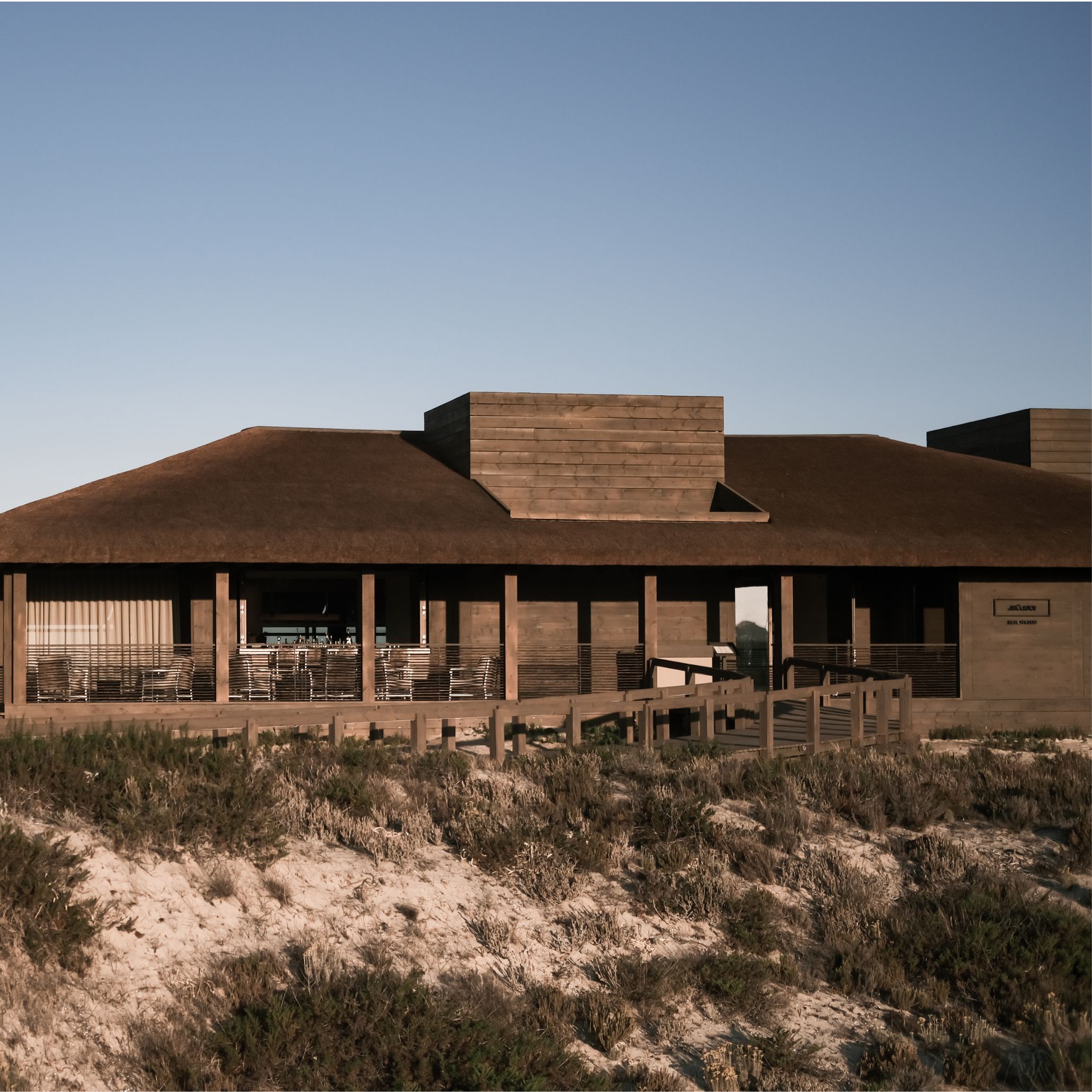
- JNcQUOI Beach Club Exterior | Source: Vincent Van Duysen
-
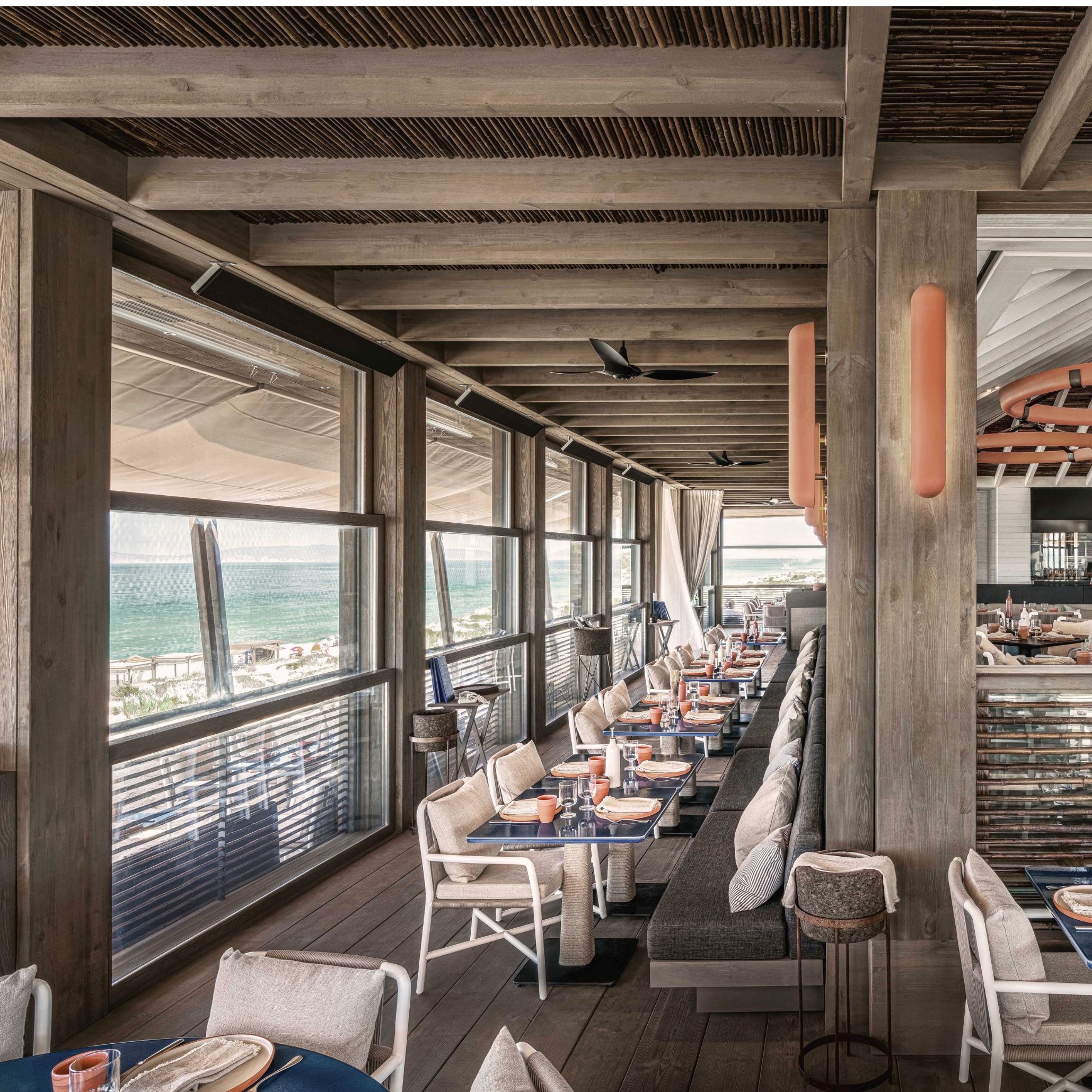
- JNcQUOI Beach Club Dining Terrace | Source: Vincent Van Duysen
AN Residence | Los Angeles, USA
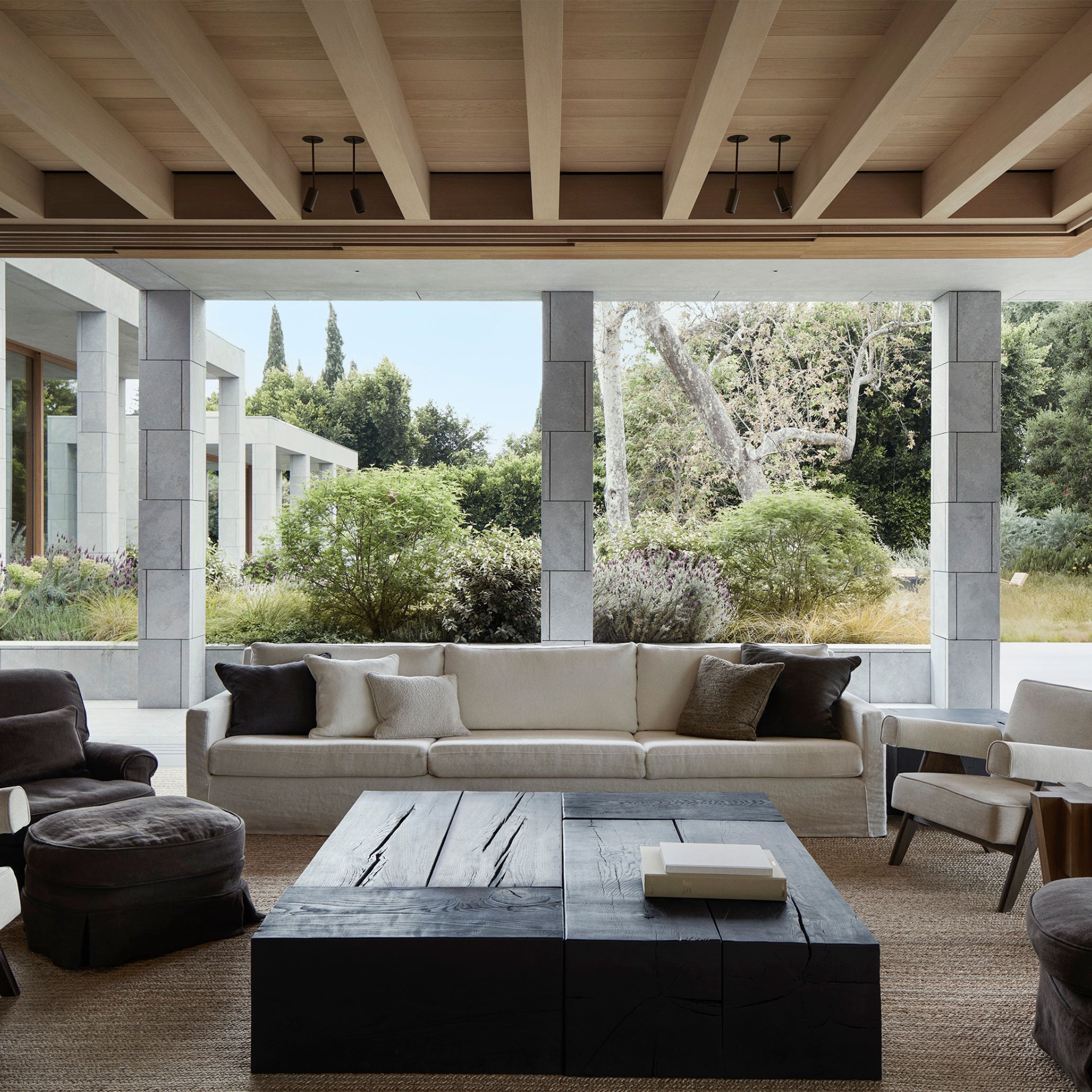
AN Residence sits on a secluded plateau in Los Angeles, emerging from the landscape as a monolithic volume that pays quiet homage to Frank Lloyd Wright’s Hollyhock House. The project is grounded in the mid-century and Case Study House tradition of the city, drawing on the precision of Richard Neutra’s Hollywood projects and the indoor-outdoor fluidity of the Kaufmann Desert House.
Natural stone covers the structural walls across a series of stacked and offset geometries, giving the residence a sculptural quality that draws the garden into the interior. Expansive openings and wooden panels dissolve the boundary between inside and outside, while a colonnade provides both shade and architectural depth. A central fireplace organises the residence into two distinct wings, one opening toward the kitchen, pool, and terrace, the other dedicated to more private living spaces.
-
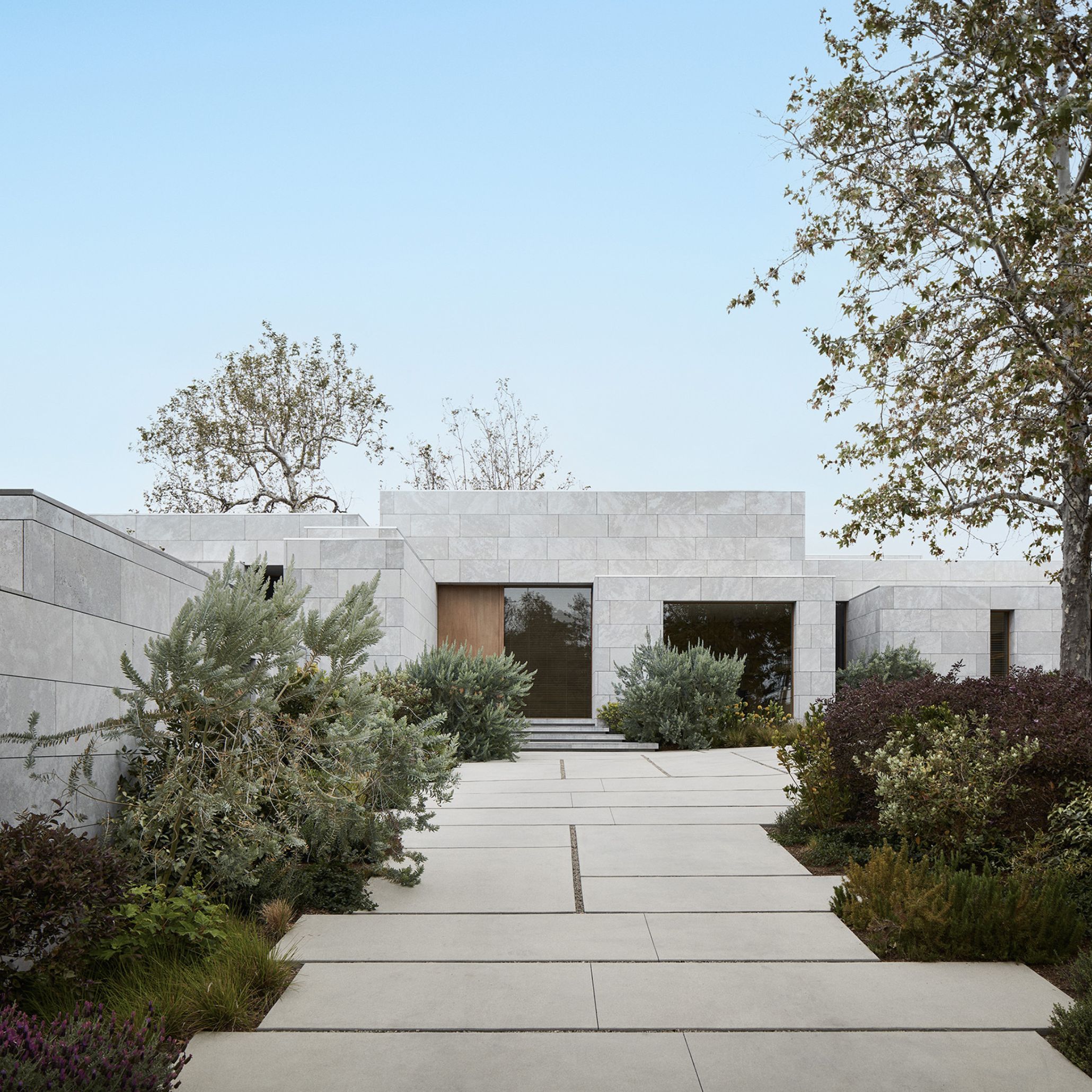
- AN Residence Exterior in Los Angeles | Source: Vincent Van Duysen
-
- AN Residence’s Indoor-Outdoor Living | Source: Vincent Van Duysen
Casa M | Melides, Portugal
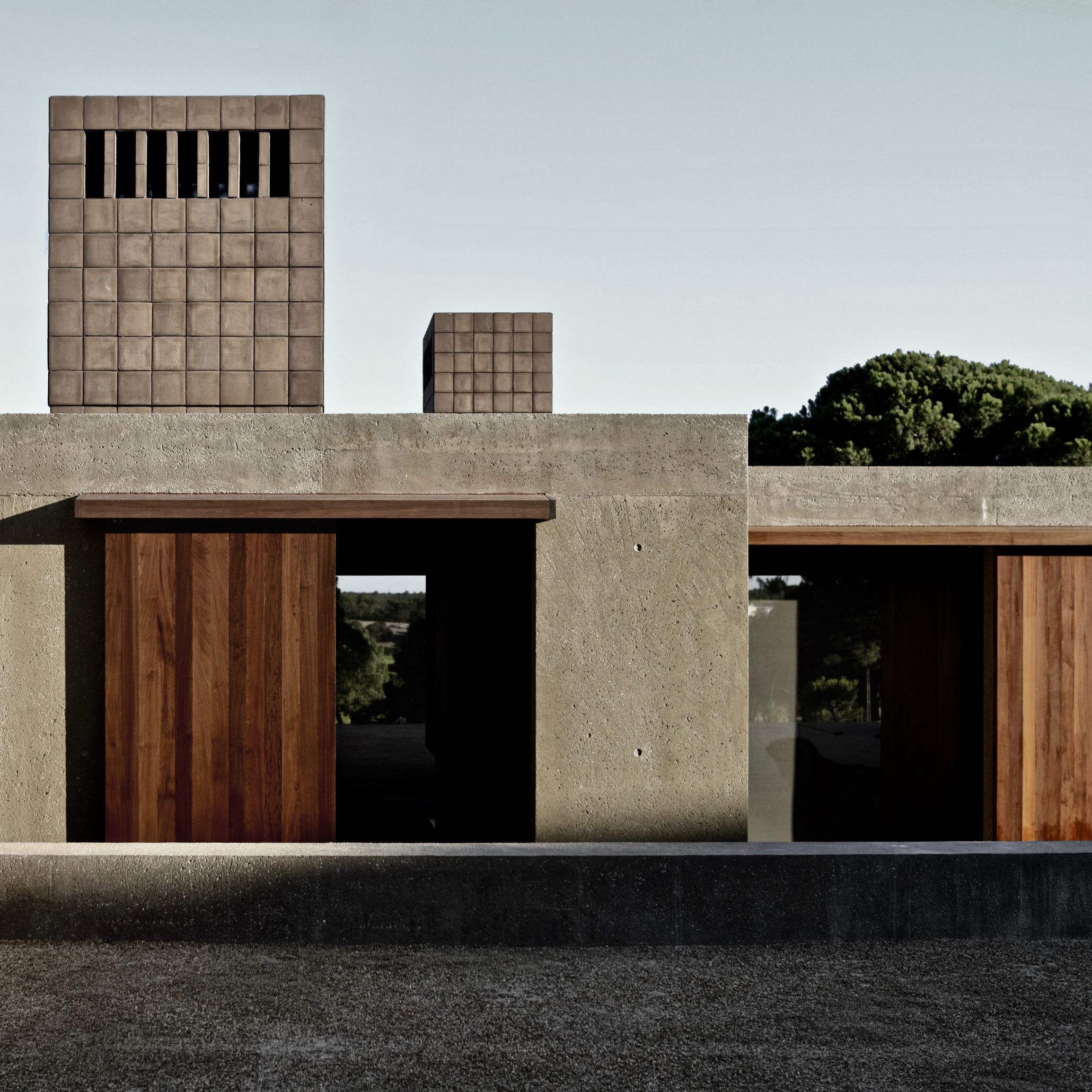
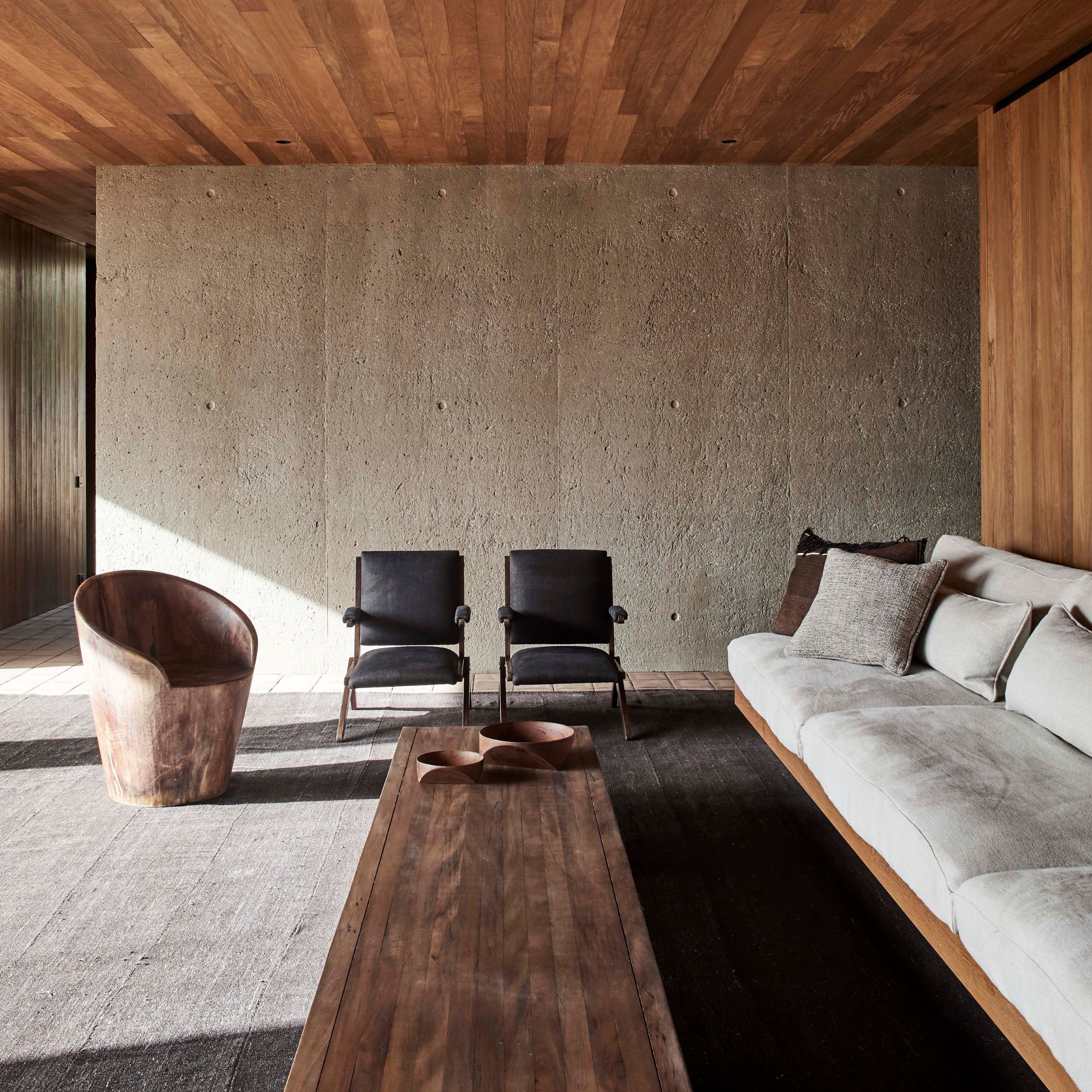
Casa M is perhaps the most personal project in Van Duysen’s body of work. Built over three years in Melides, in the Alentejo region, the house was designed by Van Duysen alongside the client, a labour of love embedded in a landscape of rolling hills, cork trees, and marine pines.
The exterior is finished in exposed aggregate concrete tinted to a bone hue, allowing the structure to disappear into its sandy surroundings rather than overpower them. The house takes in the elements, sand, light, wind, and the distant ocean, with a non-ornamental attitude. Sunrise and sunset dictate its shifting palette of light and shadow.
-
- Casa M Exterior | Source: Vincent Van Duysen
-
- Casa M Living Room Interior | Source: Vincent Van Duysen
Van Duysen’s portfolio extends further across typologies and geographies. Projects such as the Flos Fair Stand at Light+Building and the Aesop Store demonstrate the same spatial intelligence applied at smaller scales, spaces where every surface and every proportion is considered. His work carries a legacy built not on individual icons, but on a consistent and deeply committed vision.
Beyond Architecture: Furniture and Product Design
For Vincent Van Duysen, the scale of a project has never determined its ambition. A door handle and a building are shaped by the same principles, and this conviction has driven a body of product design as coherent and considered as his architecture.
The Drops for The TwentyFour Six reflect Van Duysen’s belief that even the smallest objects can shape the atmosphere of a space. Defined by simplicity and material refinement, the collection carries the same thoughtful approach that has long distinguished his architecture and interiors.
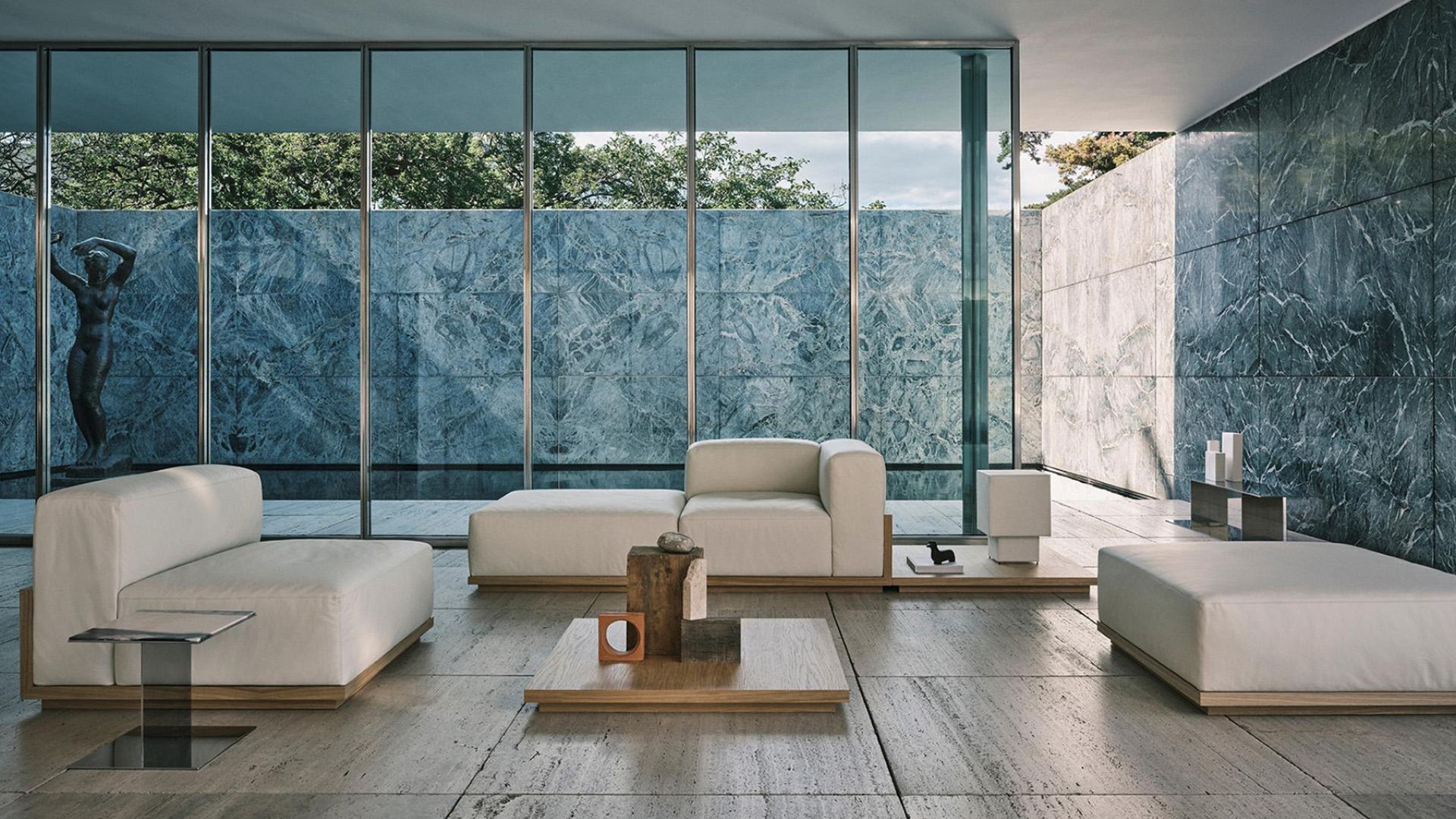
Zara Home by Vincent Van Duysen | Collection 04 brought his aesthetic to a broader audience without diluting it. The collection translates his material sensibility into objects for everyday life: elegant and deliberately free of ornament.
Augusto Modular for Molteni&C exemplifies his furniture design at its most architecturally considered. The system is conceived not as a collection of individual pieces but as a spatial proposition, one that allows rooms to be organised with the same clarity he brings to buildings.
Across all of these, Vincent Van Duysen furniture design follows a consistent logic: objects conceived from an architectural perspective, creating spatial relations rather than simply filling rooms.
-
- Zara Home Collection 04 by Vincent Van Duysen | Source: Vincent Van Duysen
Brands That Have Collaborated with Vincent Van Duysen
Over the course of his career, Vincent Van Duysen has collaborated with many of the most influential names in international design. While his body of work includes partnerships across furniture, lighting, textiles, and interiors, certain collaborations stand out for their longevity and the depth of their creative exchange.
Molteni&C has undoubtedly been the most defining of these relationships. Since becoming Creative Director in 2016, Van Duysen has shaped the brand’s identity across architecture, product design, and communication, overseeing projects ranging from Palazzo Molteni Tokyo to flagship stores around the world.
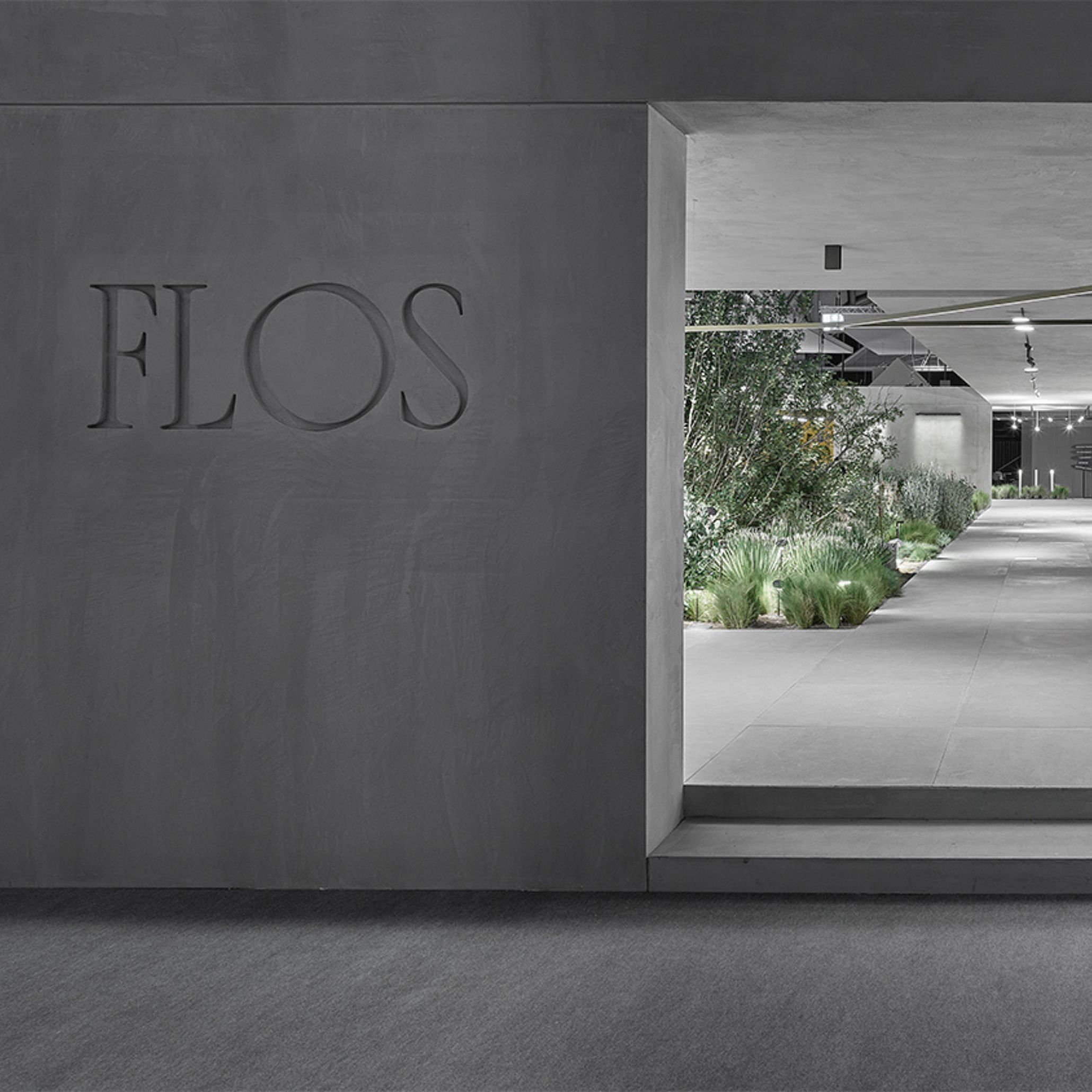
Flos has been a longstanding partner in lighting design, offering a natural extension of Van Duysen’s fascination with light and atmosphere. Since 2022, Zara Home has introduced his design language to a broader audience through collections that translate his material sensibility into everyday living. Equally significant was his collaboration with Kvadrat through the Sahco brand, where, as Art Director from 2018 to 2020, he brought his aesthetic to the world of textiles.
-
- Vincent Van Duysen Collaboration with Molteni&C | Source: Vincent Van Duysen
-
- Vincent Van Duysen Collaboration with Flos | Source: Vincent Van Duysen
Furniture Pieces Inspired by Vincent Van Duysen’s Aesthetic
Throughout his career, Vincent Van Duysen has shown that furniture can shape the atmosphere of a space as profoundly as architecture itself. Inspired by the same values of material honesty, proportion and elegance, the following Stylish Club pieces reflect that same approach to design, where every element contributes to a harmonious and elegant interior.
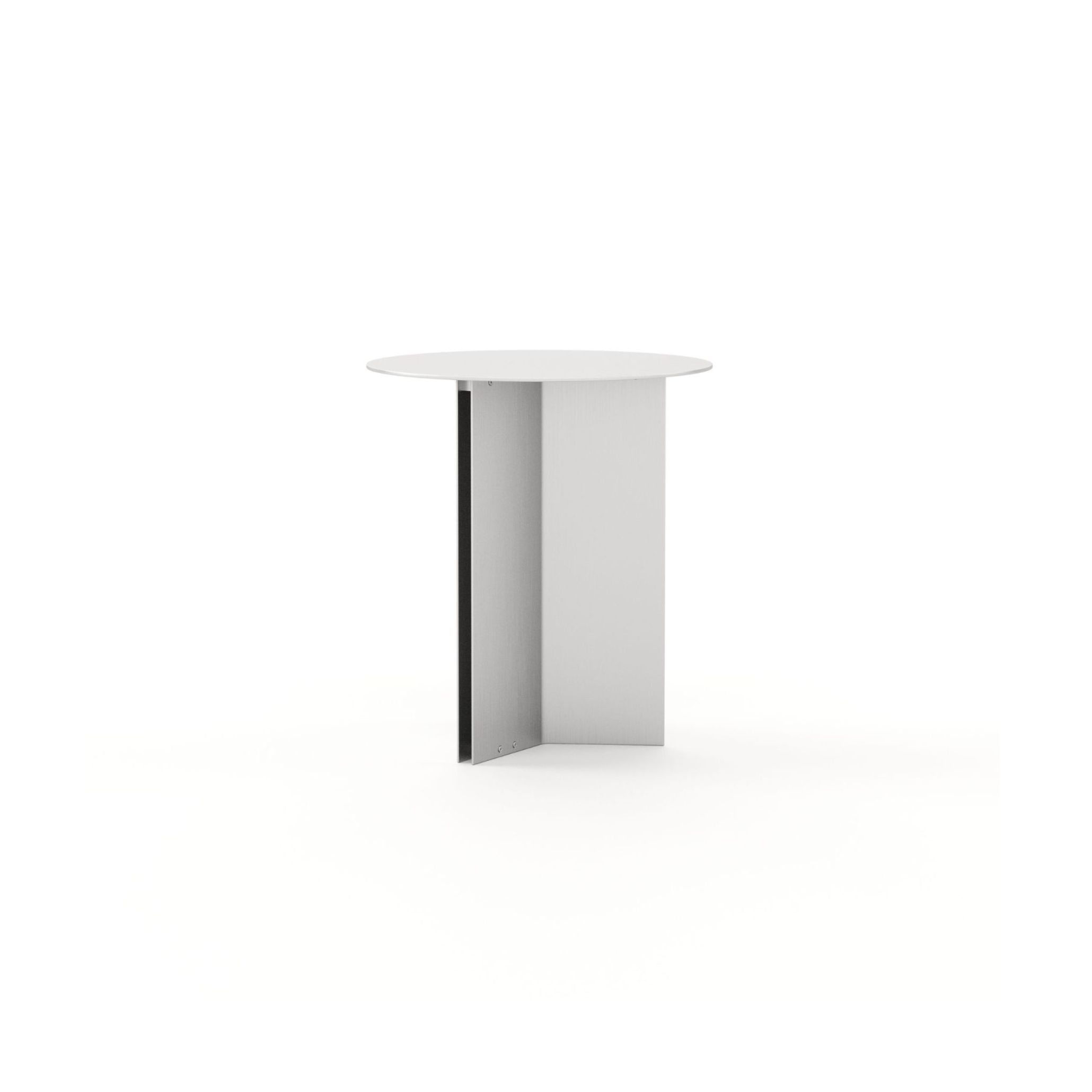
The Steel Side Table speaks in the same language as Van Duysen’s most direct material choices: honest, precise, without excess. Crafted with clarity and purpose, it introduces a quiet sense of structure that naturally complements its surroundings.
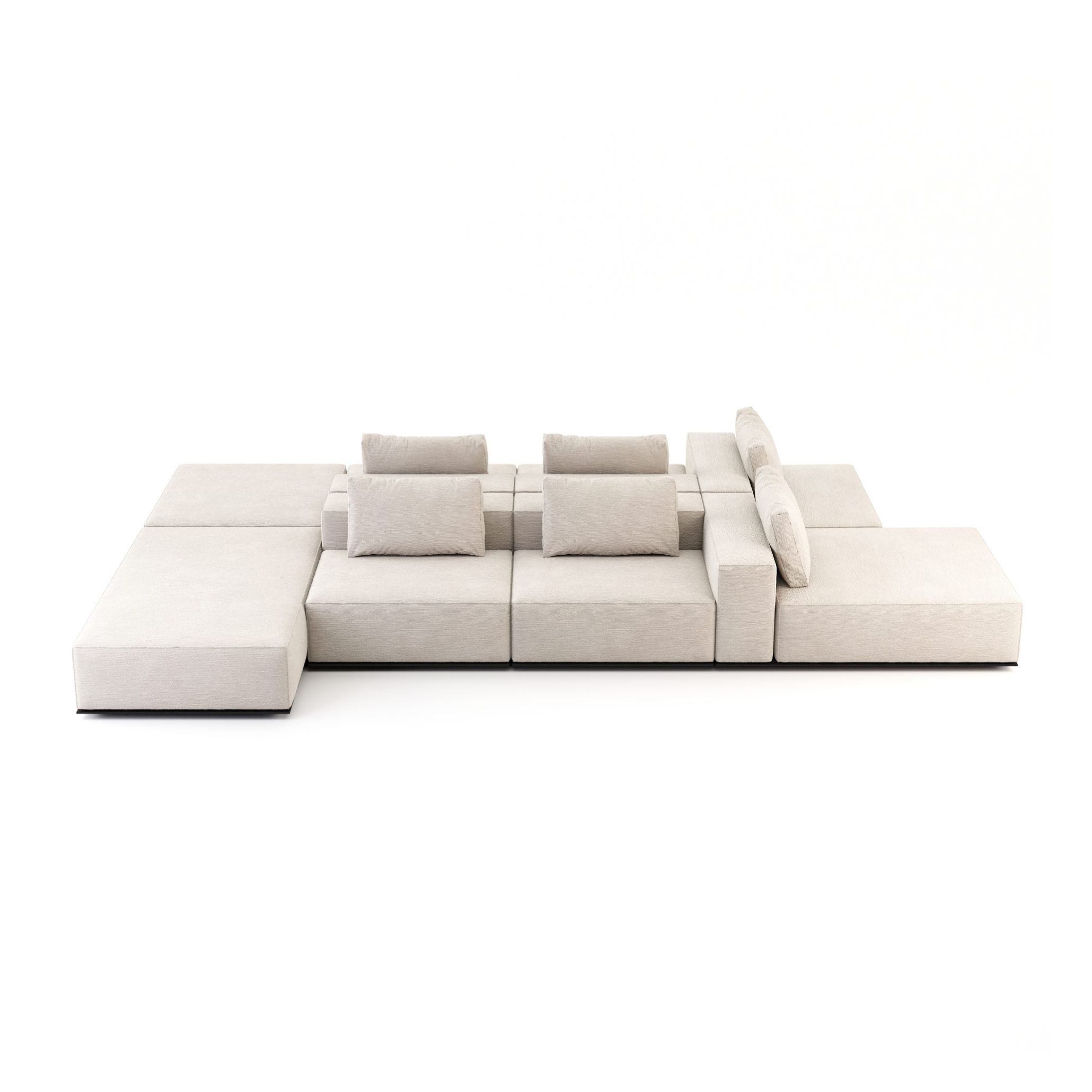
The Landform Sofa is furniture conceived architecturally. Its generous volume and grounded mass reflect the principle at the core of Vincent Van Duysen furniture design, that comfort and spatial intelligence are not in opposition. A sofa that holds its place in a room with the same conviction as a structural wall.
The Toro Side Table I carries the quiet resolve of a piece that knows exactly what it is. Compact and material-forward, it exists within a room without competing with it, a small object with the kind of spatial self-assurance that Van Duysen has always valued.
Together, these pieces reflect the spirit of Vincent Van Duysen interior design: spaces where every element earns its place, and where simplicity is always the result of careful thought.
-
- Steel Side Table
-
- Landform Sofa
-
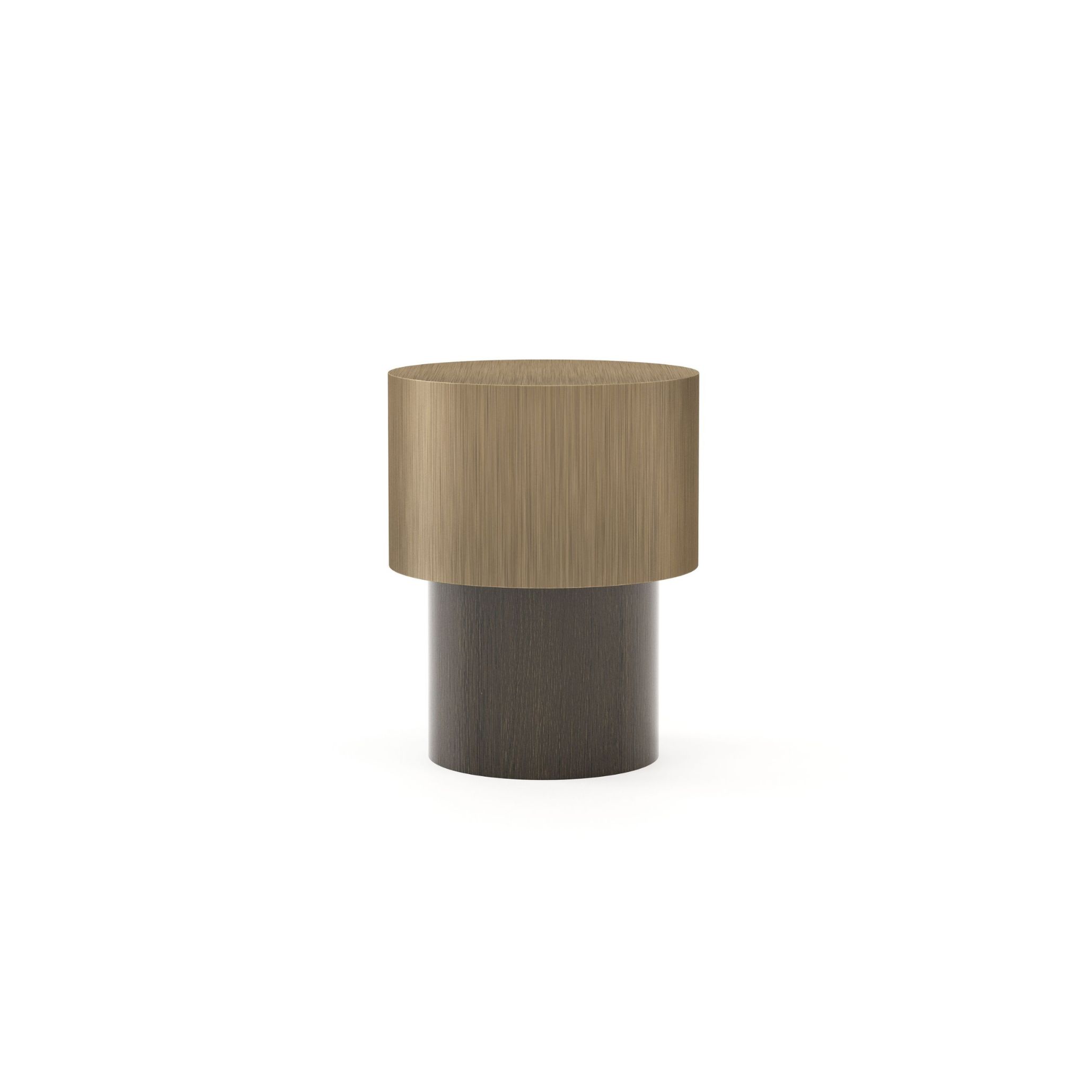
- Toro Side Table I
For more than three decades, Vincent Van Duysen has perfected a design language defined by materiality and a deep understanding of how people inhabit space.Across architecture, interiors, and furniture, his practice demonstrates that the most powerful spaces are those that listen before they speak, that place the human experience above the architectural statement. In a discipline that often mistakes complexity for depth, Vincent Van Duysen reminds us that true beauty has always lived in simplicity.