The Farnsworth House: The Essence of “Less Is More”
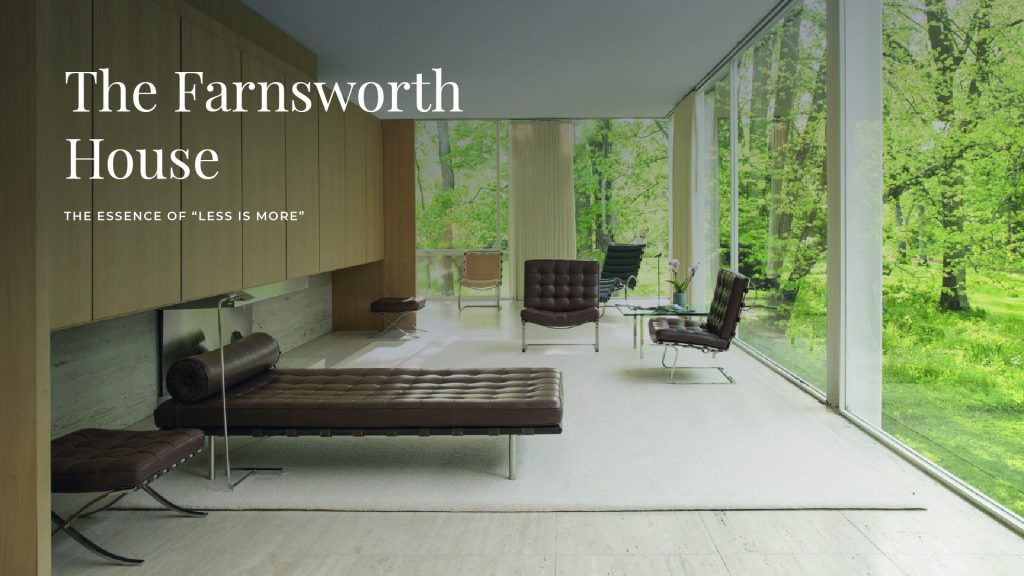
Light resting on glass. Steel hovering above the earth. Silence shaped into form. The Farnsworth House stands as one of the clearest architectural statements of the 20th century, where living is reduced to its most essential gestures. Conceived as a place of retreat, it challenges traditional ideas of domestic space and invites a slower, more conscious way of inhabiting architecture.
This article explores The Farnsworth House through its origins, its philosophical foundation, and its lasting influence. From the vision of its architect, Mies Van der Rohe, to the legacy it left behind, the house reveals why Less is More remains one of the most powerful ideas in modern design.
-
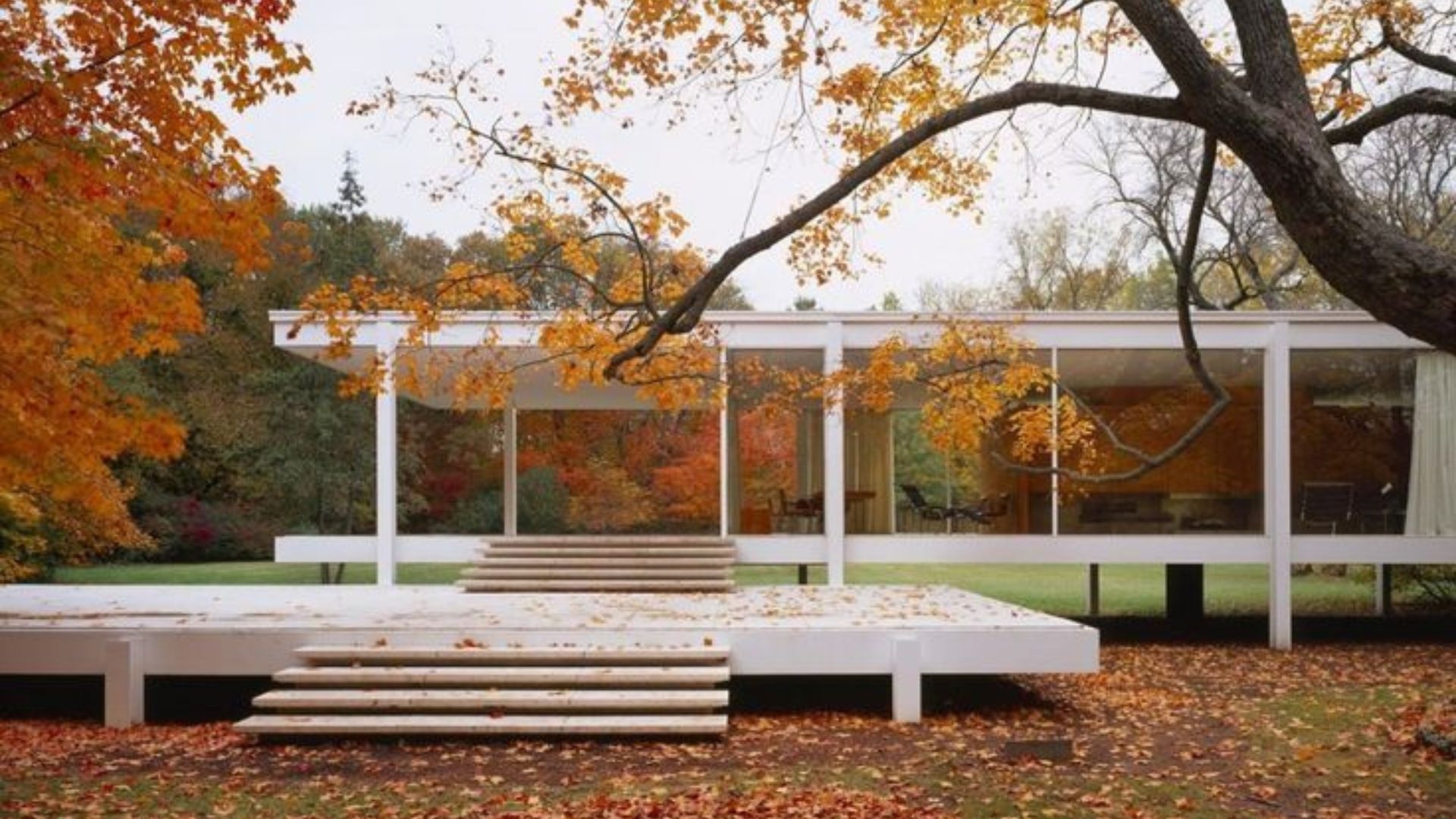
- The Farnsworth House | Source: Pinterest
The Farnsworth House’s History
The Farnsworth House was projected as a weekend residence immersed in nature. Built between 1949 and 1951, it rises delicately above the Fox River floodplain in Plano, Illinois, appearing almost weightless within its surroundings. Composed of a steel frame and expansive glass walls, the house offers uninterrupted views of the landscape, turning nature into an ever-present companion.
Commissioned by Edith Farnsworth, the project was meant to serve as a personal gateway for reading, reflection, and solitude. A physician, intellectual, and devoted advocate of the arts, Farnsworth was deeply involved in the conceptual dialogue of the house, engaging closely with Mies Van der Rohe throughout the design process. Over time, the residence became known as the Edith Farnsworth House, a name that acknowledges her role and the intense dialogue that shaped the project.
-
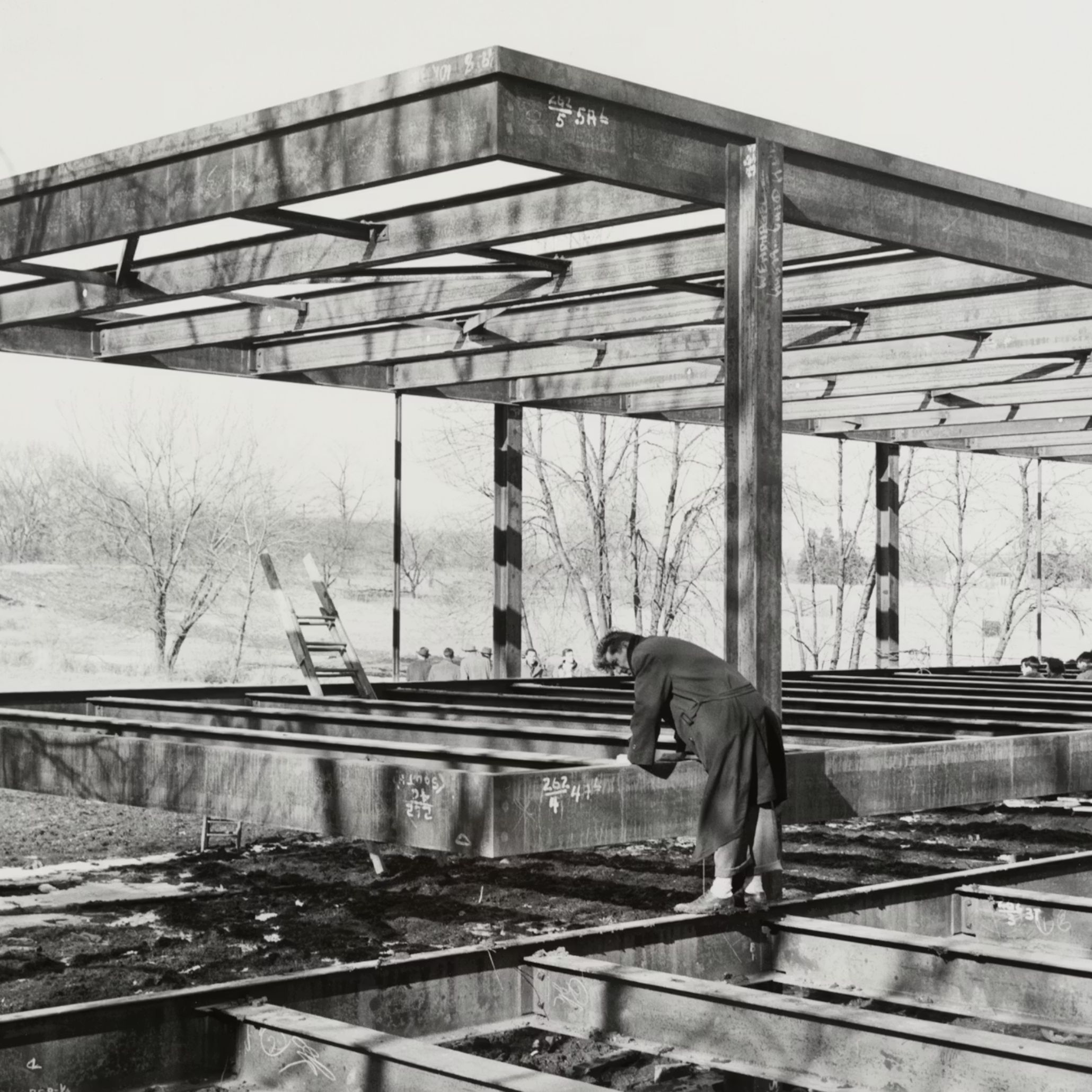
- Construction of the Farnsworth House | Source: Pinterest
-
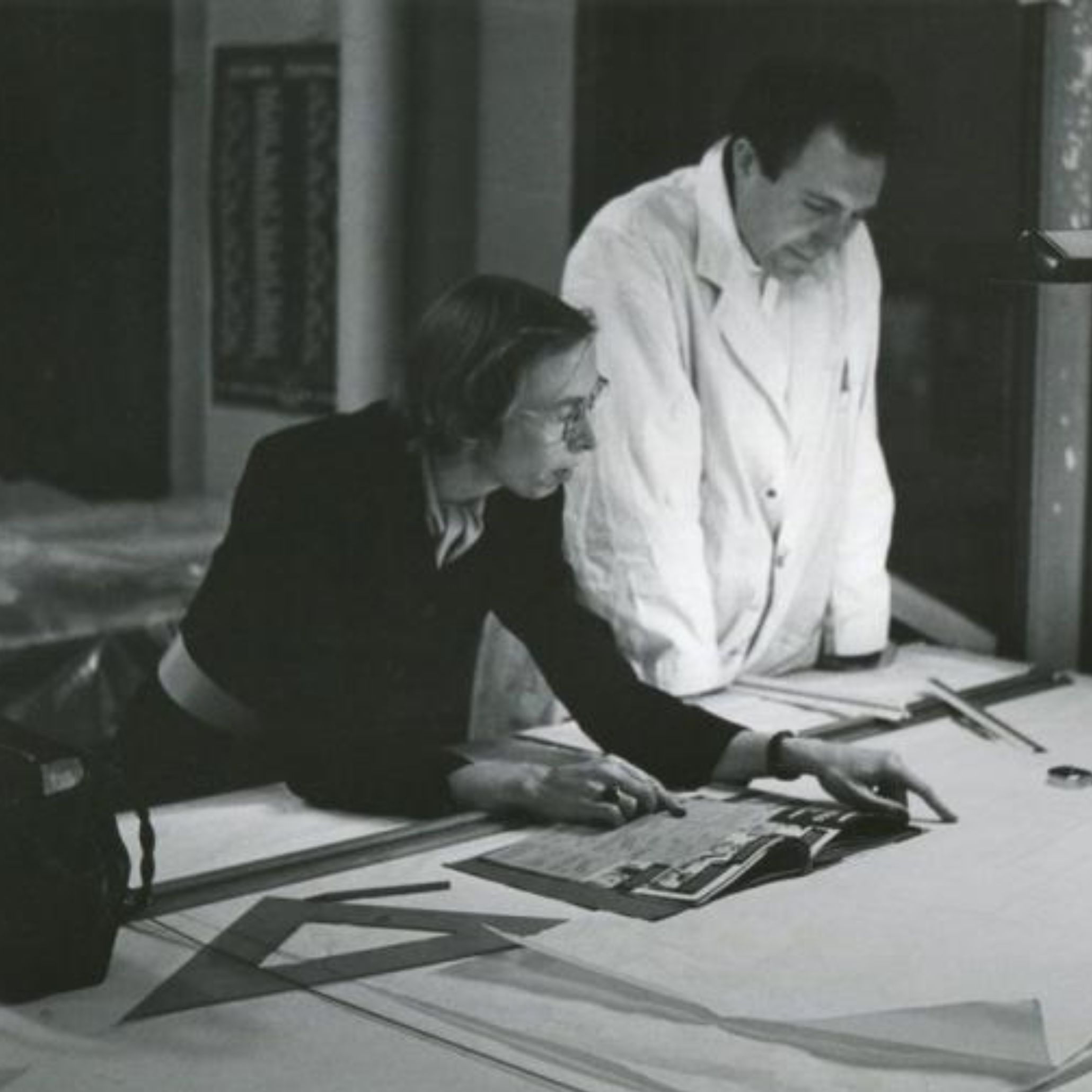
- Edith Farnsworth Working on the Farnsworth House | Source: Edward Duckett
The house consists of a single open space, subtly organized by a central core that contains the essential functions of daily life. This radical openness defined what would later be studied as the Farnsworth House Interior, where furniture placement replaces walls and movement becomes fluid. As an architectural work, it stands as a defining example of Mies Van Der Rohe Architecture, challenging conventions of privacy, enclosure, and comfort.
Today, The Farnsworth House is owned and preserved by the National Trust for Historic Preservation, allowing the public to experience one of modernism’s most influential residential works.
-
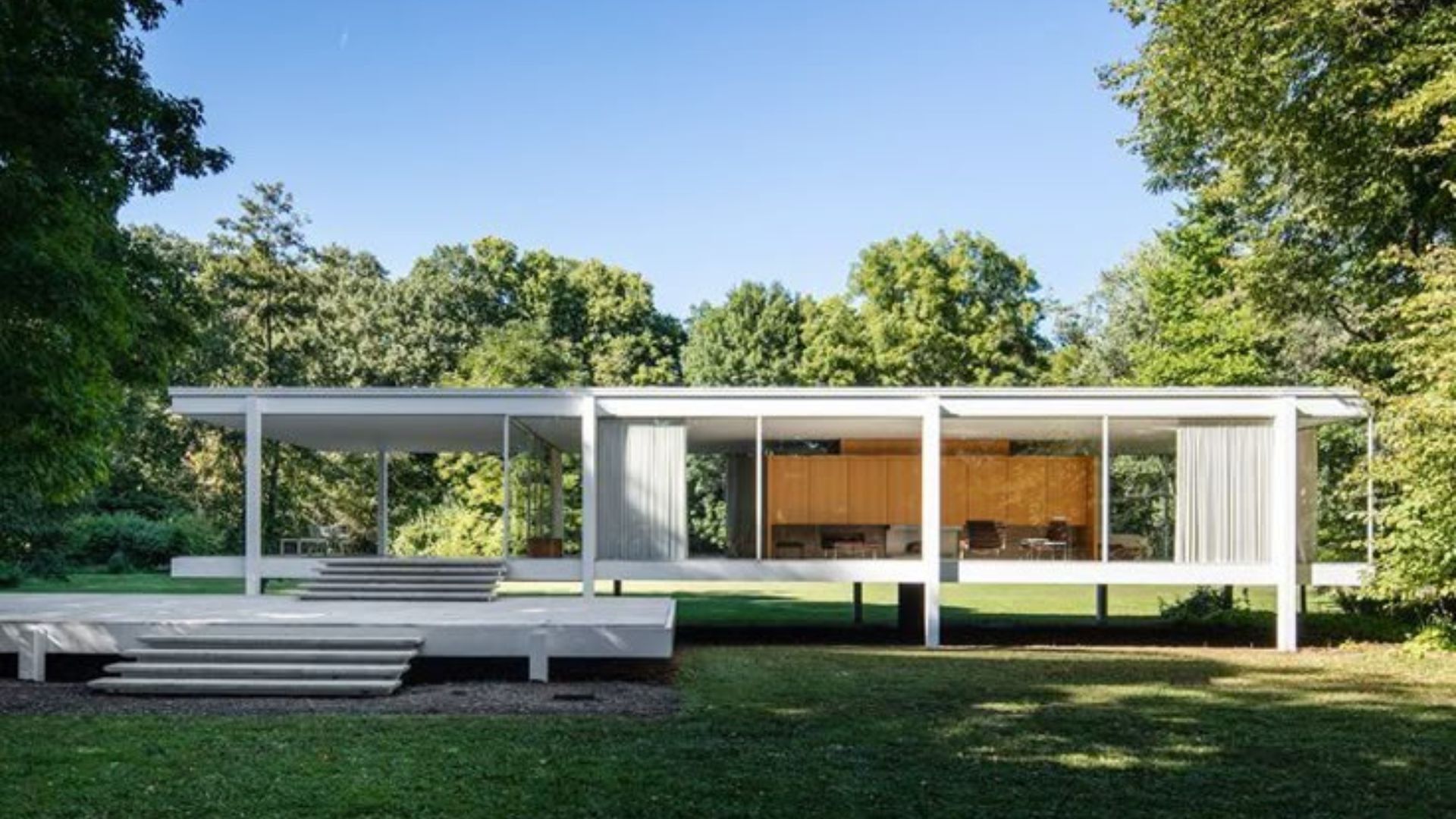
- The Farnsworth House Exterior in Its Natural Setting | Source: Pinterest
Vision and Architectural Philosophy
Designed in the late 1940s by Mies van der Rohe, The Farnsworth House represents a pure expression of its architectural philosophy. Often referenced as the Mies Van Der Rohe Farnsworth House, it translates theory into built form with clarity and restraint.
Central to Mies Van Der Rohe Architecture is the belief that structure should be honest and space should remain free. The principle Less is More guided every decision, from the exposed steel frame to the geometry of the plan. Nothing is hidden, and nothing is added without purpose.
Glass dissolves the boundary between interior and exterior, allowing seasons, light, and weather to shape daily experience. The elevated floor enhances this relationship, creating a sense of detachment from the ground while maintaining a close dialogue with nature. Within the Farnsworth House Interior, the absence of walls encourages a new way of living – one defined by openness and proportion.
This vision positions The Farnsworth House not simply as a residence, but as an architectural manifesto that continues to challenge how space can be experienced.
-
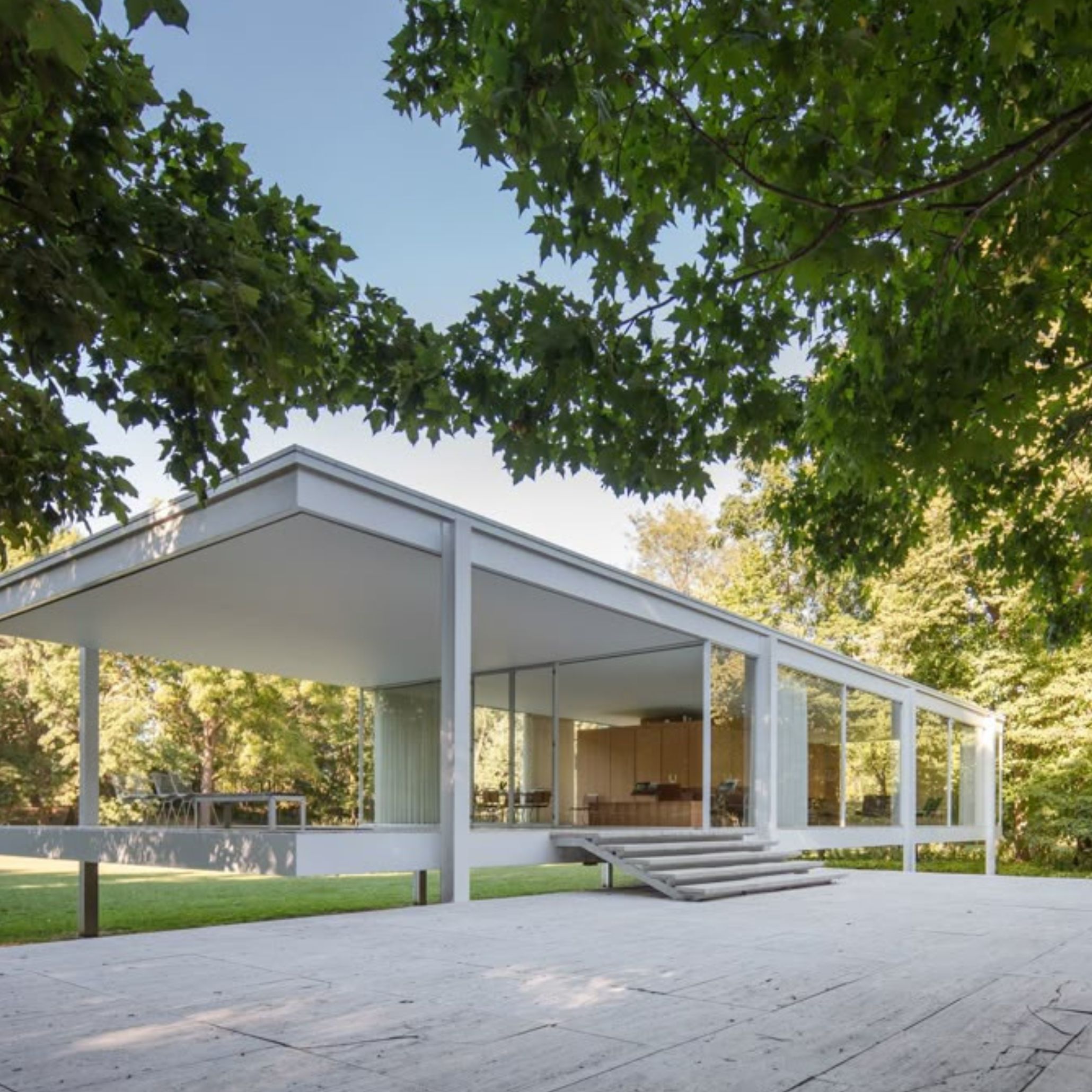
- The Farnsworth House and the Principle of Less Is More | Source: Pinterest
-
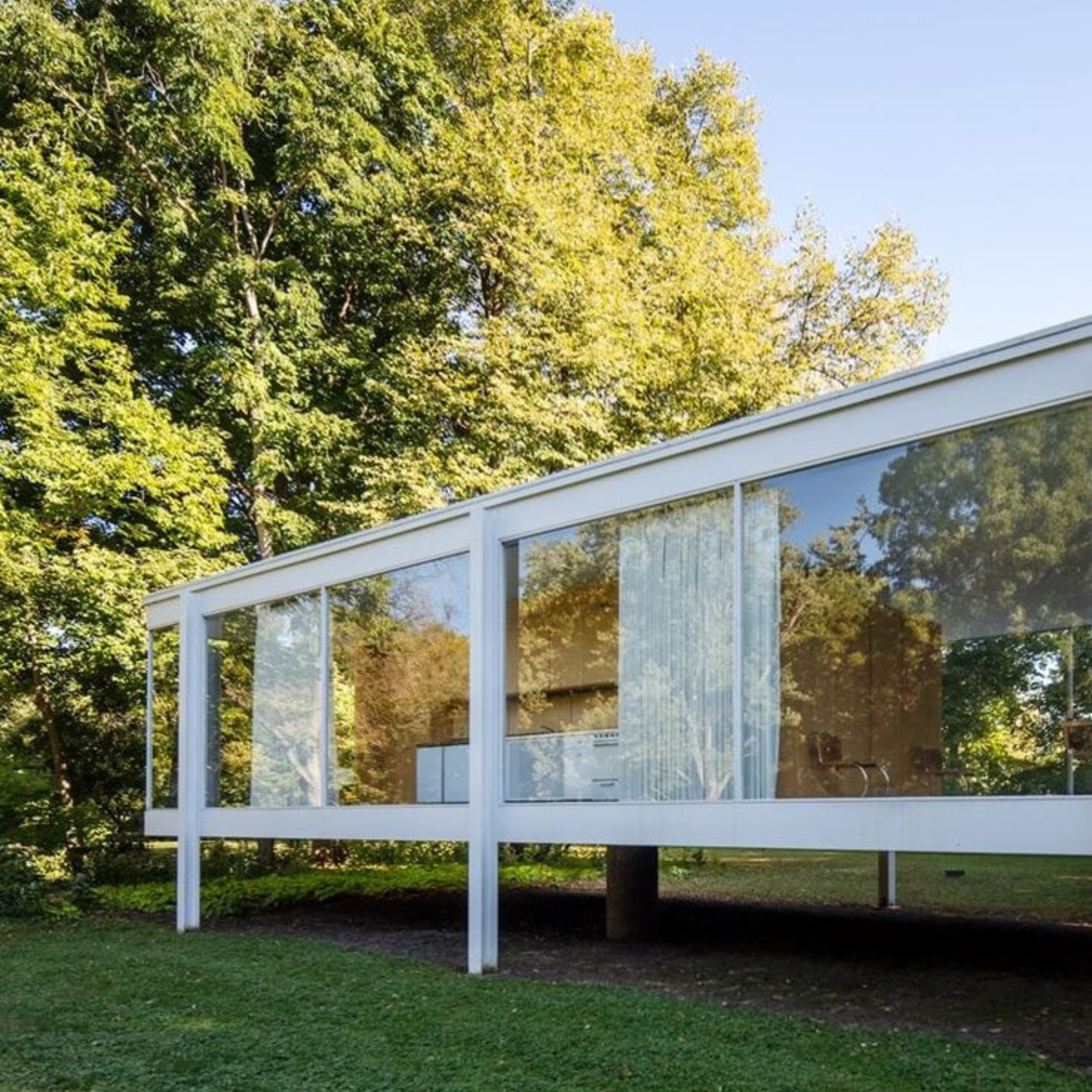
- The Farnsworth House Exterior and Interior Transparency | Source: Pinterest
The Farnsworth House’s Lasting Legacy in Contemporary Architecture
The significance of The Farnsworth House lies in its lasting influence. It revealed that architecture could be reduced without becoming empty, and that restraint could carry emotional depth. Its clarity reshaped residential design and became a reference for open-plan living around the world.
Widely regarded as one of the most studied works of modern architecture, the house is famous because it redefined the relationship between structure, landscape, and inhabitant. Architects continue to study Farnsworth House Architecture as a benchmark for proportion and spatial discipline. Its impact extends beyond buildings, shaping approaches to furniture and interior design as well.
-
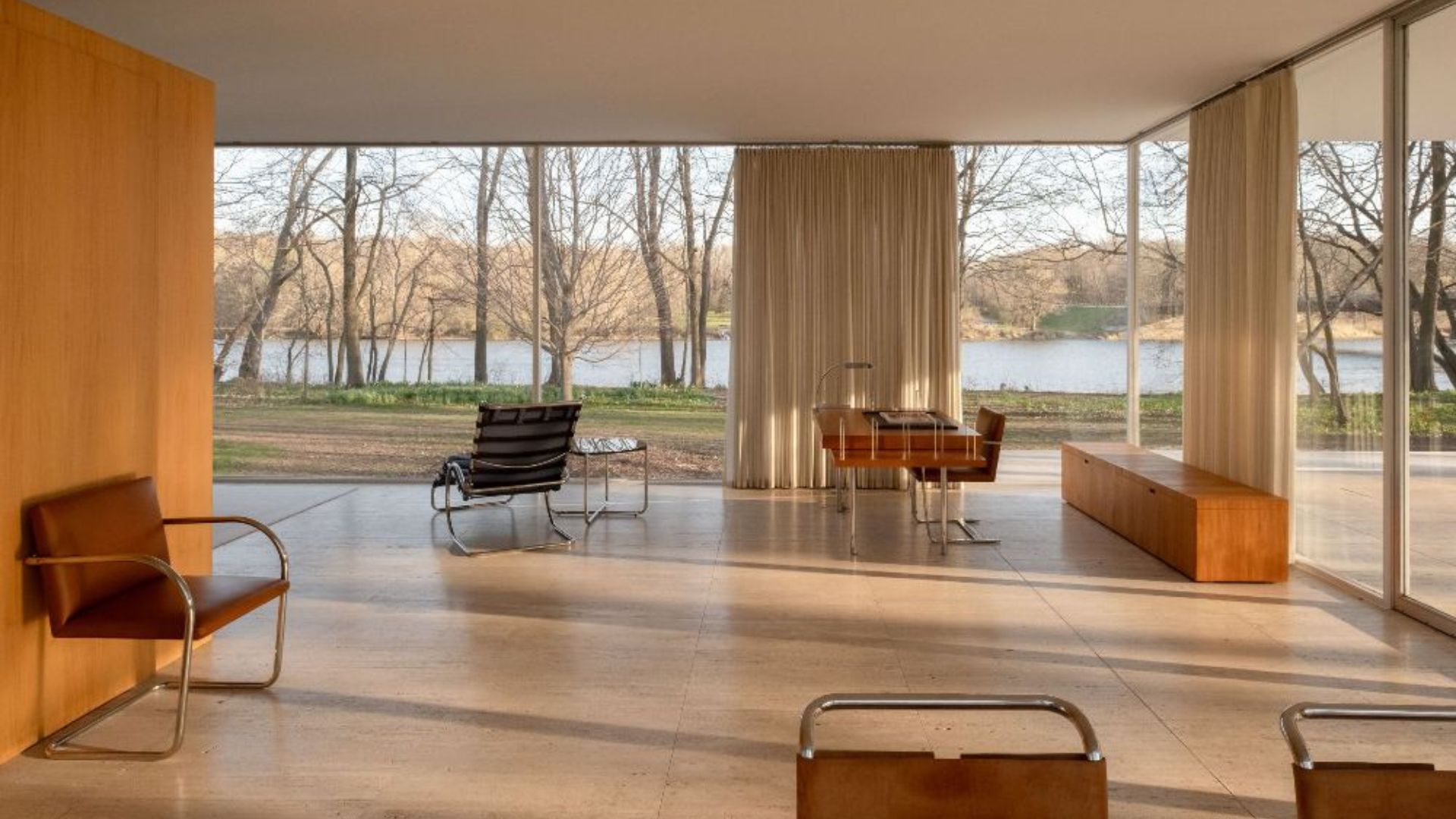
- Interior of the Farnsworth House | Source: Pinterest
The philosophy of Mies Van Der Rohe continues to inspire contemporary creators, including our own approach to furniture design. The pursuit of essential forms, thoughtful materials, and respect for space reflects the same belief that Less is More is not about reduction alone, but about intention and balance. This philosophy is portrayed in pieces such as the Steel Side Table and the His Dining Table, which mirror the same careful use of materials and the principle that Less is more found in the Farnsworth House.
This same vision guided Stylish Club’s stand concept at iSaloni 2025. Inspired by The Farnsworth House, the concept “naturally, one” embraced openness, continuity, and the belief that space should flow rather than divide. Rooted in the principle that Less is More, the stand became an open environment where furniture and space coexisted without boundaries, reflecting the idea that living spaces are not separate from the world around us, but part of a single, harmonious whole.
Through decades of study and admiration, The Farnsworth House remains present in modern design culture, influencing how we shape spaces meant for living.
-
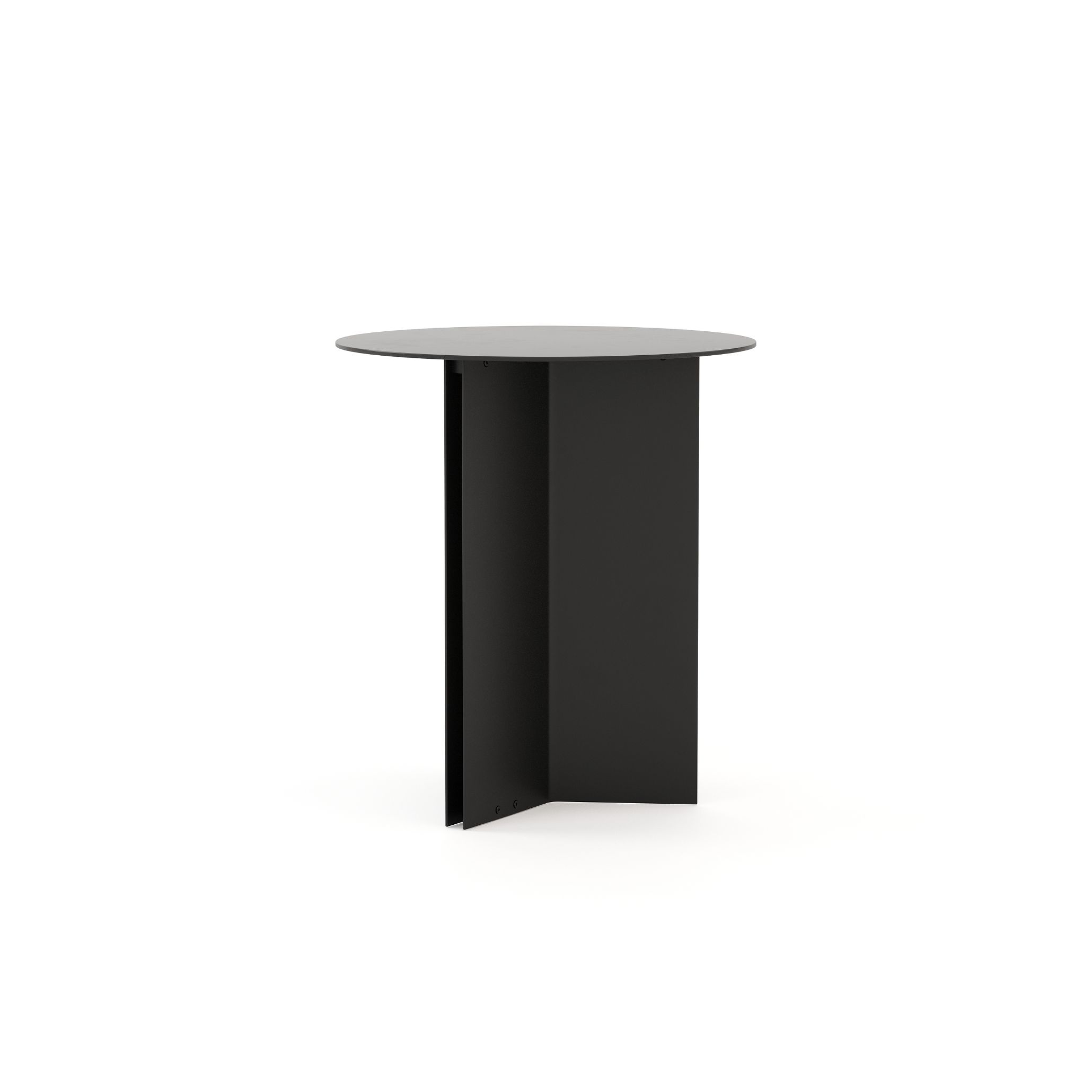
- Steel Side Table
-
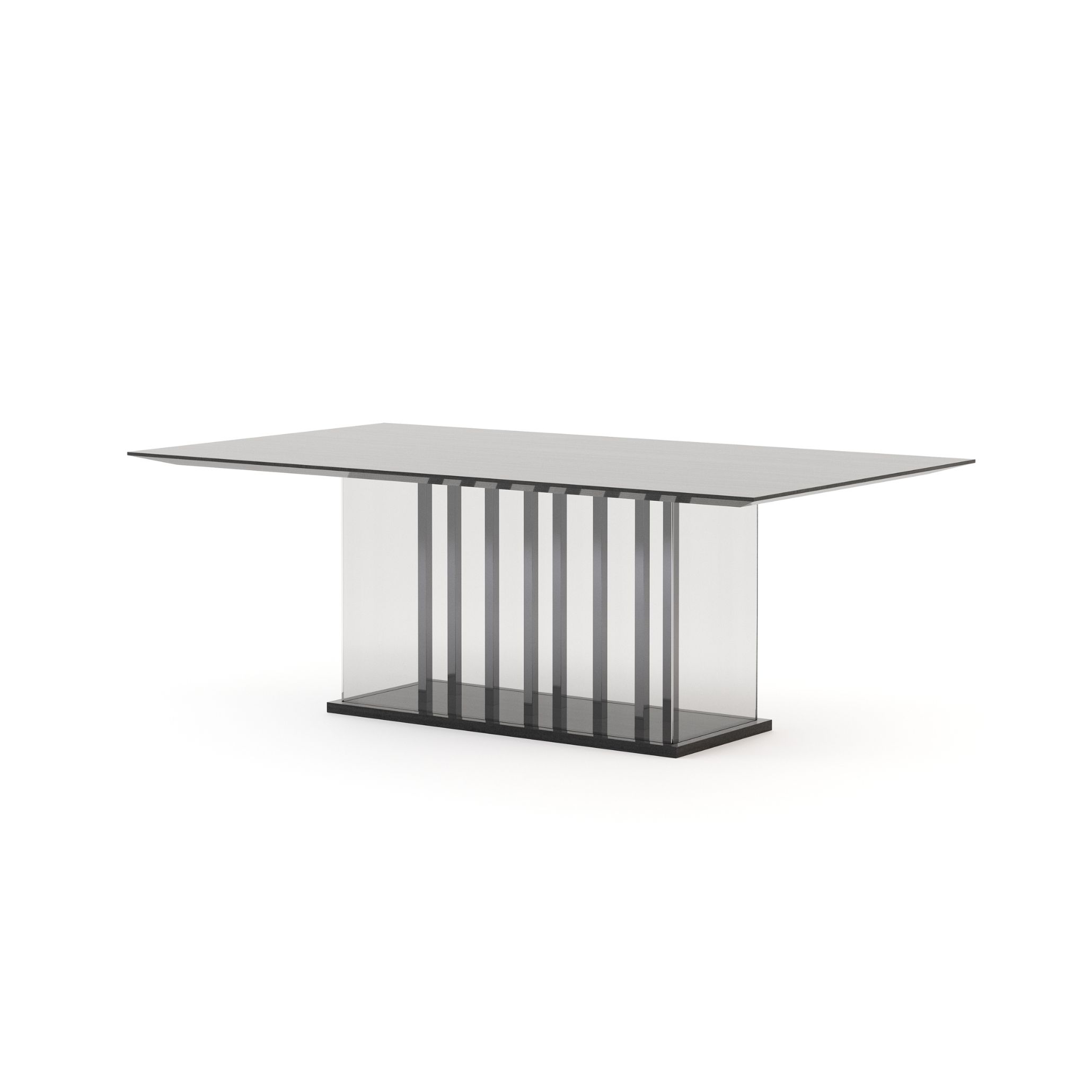
- His Dining Table
The Farnsworth House endures because it asks us to slow down. Born as the Edith Farnsworth House, it was imagined as a place where life could exist without distraction, shaped by a dialogue between architecture, nature, and thought. Through precision and restraint, Mies Van Der Rohe transformed structure into silence, allowing light, landscape, and proportion to guide the experience of the space.
Time has not diminished its presence; instead, it has reinforced its influence on architecture and design alike. In its transparency and calm, The Farnsworth House reminds us that Less is More is not about taking away, but about allowing what truly matters to come into focus.